Gay Powers Restored: How Haircuts Have Shaped Queer Identity, Culture, and Confidence
More Than a Trim: Haircuts as Identity and Alignment
Hair has long functioned as a form of self-expression, communicating identity, mood, and belonging without a single word. Within LGBTQ+ communities, where visibility and signaling have historically carried real weight, a haircut often holds deeper meaning. What might appear to be routine maintenance can instead act as a moment of transformation: a reset, a reclamation, and a visible expression of internal alignment.
Research on self-perception suggests that identity is shaped through an ongoing interplay between how individuals see themselves and how they are perceived by others. Appearance, in this sense, becomes a bridge between internal understanding and external recognition. Hairstyles operate as nonverbal cues, subtly shaping first impressions and signaling everything from personality to community affiliation.
Seen through this lens, a haircut is not just aesthetic upkeep—it is both personal expression and social communication. It allows individuals to refine how they show up in the world while aligning outward presentation with an internal sense of self.
The Confidence Effect: Why a Fresh Cut Feels Transformative
The immediate confidence boost that follows a haircut is widely recognized, even if it’s often framed humorously as “gay therapy.” Beneath the joke are real psychological dynamics.
One key factor is control. Choosing a style that reflects personal taste offers a sense of agency over self-presentation—something that can feel especially grounding in environments where identity is often scrutinized or misunderstood. Grooming also functions as a form of self-investment, reinforcing a sense of worth and care.
There’s also a social feedback loop at play. The “halo effect”—a cognitive bias in which one positive trait influences broader perception—means that looking polished can lead others to perceive confidence, competence, and attractiveness. That external validation often reinforces internal confidence, creating a near-instant shift in how someone both feels and is received.
Together, these elements explain why a haircut can feel like a recalibration rather than a routine task—a small, visible change that brings internal identity and external perception into closer alignment.
Signaling, Style, and Cultural Context
The idea of a haircut “restoring gay powers” may be playful, but it reflects a deeper cultural history. Style has long functioned as a visual language within LGBTQ+ communities, which communicates identity, belonging, and recognition.
In times when visibility came with risk, grooming and fashion often served as coded signals, allowing individuals to find one another while navigating broader social constraints. At the same time, more visible stylistic choices emerged as acts of expression and resistance, challenging traditional norms around gender and sexuality.
Distinct subcultures illustrate how deeply embedded hair and grooming are in signaling queer identity. After World War II, societal backlash against LGBTQ+ people forced caution in public life, shaping the development of subcultural styles. Within lesbian working-class bar culture, the butch aesthetic—short haircuts, suits, and ties—stood in contrast to femme style, which embraced traditionally feminine clothing and makeup. This was politically significant: by refusing to pass as straight, butch women made lesbian identity visible and asserted presence in public spaces.
Similarly, in gay male communities, the Castro Clones of the 1970s popularized hyper-masculine grooming—short, structured haircuts paired with rugged styling—as a way to signal identity, desirability, and belonging within a shared cultural framework. These choices were never just about appearance—they were about being seen and understood within a shared cultural framework.
That legacy continues today. Hair remains a tool for self-definition, whether through subtle refinement or bold reinvention. For many, it also plays a role in gender expression, offering a tangible way to align внеш appearance with internal identity—an alignment that can be both affirming and psychologically impactful.
Behind the Chair: Why Environment Matters
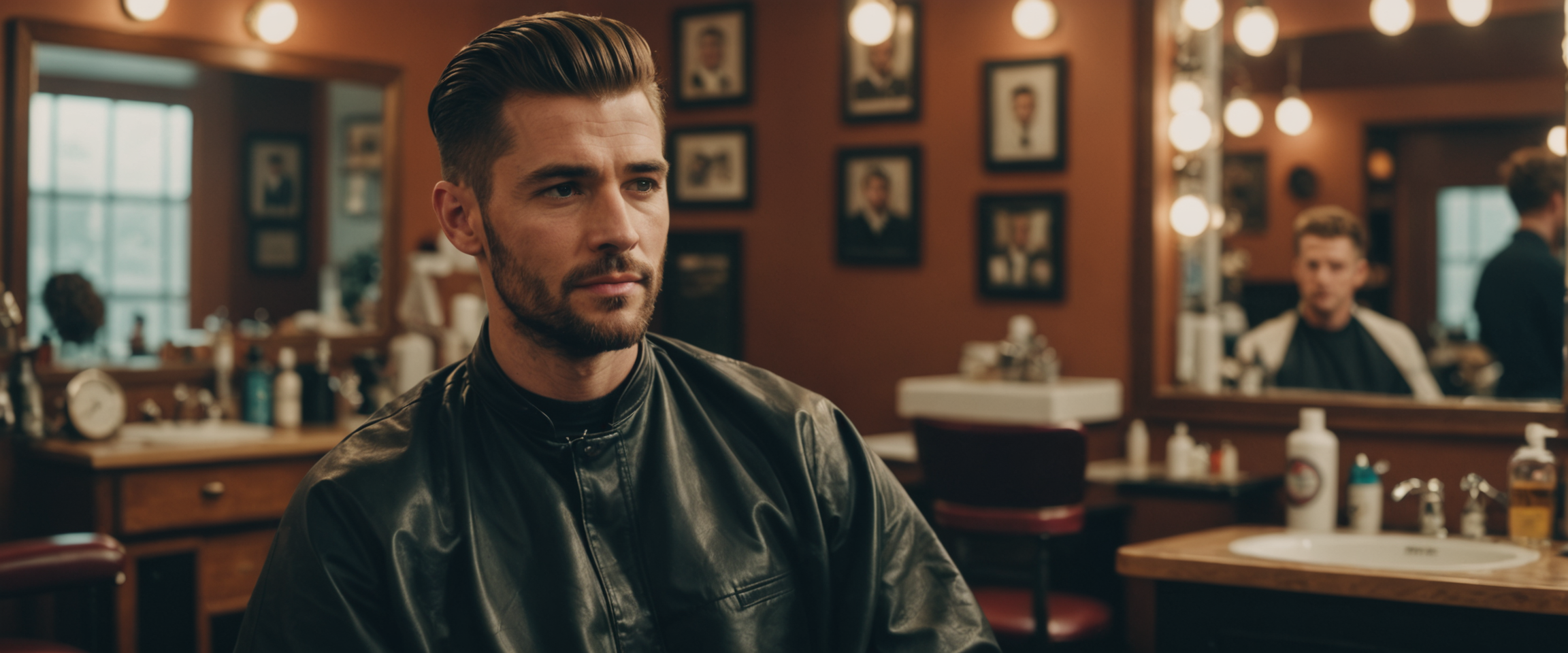
The meaning of a haircut is shaped not only by the style itself, but by the space in which it happens. Traditional barbershops, often rooted in rigid norms of masculinity, can feel unwelcoming for some LGBTQ+ individuals, creating pressure to conform in what should be a routine experience.
In response, more affirming spaces have emerged—environments designed to prioritize inclusion, comfort, and authenticity. These spaces move beyond the transactional nature of a haircut, recognizing it as an interaction grounded in trust and self-expression.
Some focus on gender-affirming services, helping clients align their appearance with their identity. Others challenge industry norms like gendered pricing or normalize conversations around pronouns and presentation. The result is a shift in what the experience represents: not just a service, but a moment of affirmation.
In that context, the idea of “gay therapy” becomes less metaphorical. The impact is shaped as much by the environment as it is by the outcome.
Queer Hair, Don’t Care: Style as Reinvention
Queer hairstyling has long existed at the intersection of fashion, identity, and experimentation. From classic cuts to more unconventional styles, these choices often reflect a willingness to push boundaries and redefine norms rather than simply follow them.
Color, too, plays a role. While dramatic changes are sometimes framed as impulsive, they often represent something more intentional: autonomy, reinvention, or the freedom to explore identity without constraint.
In this way, hairstyling becomes both personal and cultural. It offers a space to experiment, evolve, and express different facets of identity—sometimes subtly, sometimes visibly.
At its core, this evolution reflects something deeper than aesthetics. It speaks to permission: the ability to change, to redefine, and to present oneself in a way that feels authentic in the moment.
Stepping Back Into Alignment
At its core, the idea of a haircut as “gay therapy” reflects something deeper than appearance. Small, intentional changes can create space to reset, realign, and reconnect with a sense of self that may have felt out of reach.
Hair, in this context, becomes a tool for translating identity into something visible and tangible. That alignment between how someone feels and how they present can be grounding, affirming, and, at times, transformative.
As more inclusive spaces continue to emerge, the haircut is increasingly understood for what it can be: not just maintenance, but intention. A simple appointment becomes an opportunity to express identity, reclaim confidence, and step forward with clarity.
What looks like a surface-level change often marks something more meaningful—a quiet but powerful return to self.
And remember: every day is all we have, so you've got to make your own happiness.
For more information on this topic, listen to Episode 181. Gay Powers Restored: Why Haircuts Hit Different.
Tune into your favorite podcast player every Tuesday for new episodes of A Jaded Gay.

Queer Mysticism and the Stars: Mapping Desire, Healing, and Identity