
178. Heal Your Inner Gay Child (with Chris Tompkins)


Previously, we’ve discussed how growing up gay in a world that often misunderstood or rejected us can leave deep emotional scars. In adulthood, these wounds may show up as shame, fear of intimacy, self-doubt, or difficulty trusting both ourselves and others.
In this episode, Chris Tompkins, founder of A Road Trip to Love, joins us to explore how gay men can recognize, nurture, and heal the wounded parts of their inner child to transforming past pain into self-acceptance.
Related Episodes:
- Listen to Episode 121. Unpack Your Gay Emotional Baggage (with Dr. Jason Durant)
- Listen to Episode 146. The Velvet Rage
Additional Resources:
00:00 - Snarky Opener
00:32 - Episode Introduction
01:30 - Inner Child Work
02:17 - Tarot
03:06 - Guest Introduction
06:57 - What is an Inner Child?
08:59 - Early Experiences That Impact a Gay Man’s Inner Child
13:45 - How Family Dynamics Shape the Gay Male Inner Child
16:26 - How Relationships Trigger Inner Child Wounds
18:33 - Healing Your Inner Child
21:29 - Tools and Practices for Inner Child Healing
25:15 - Community and Healing for Gay Men
27:01 - Reclaim Your Inner Child
28:13 - Episode Closing
29:27 - Connect with Chris
30:38 - Connect with A Jaded Gay
Snarky Opener (0:00)
Chris Tompkins
Those early childhood experiences still exist, and they live inside of our nervous system and our bodies, and so they show up in our relationships, and they show up in our relationship to ourselves.
Episode Introduction (0:32)
Rob Loveless
Hello, my LGBTQuties, and welcome back to another episode of A Jaded Gay.
I'm Rob Loveless, and today I am a non-jaded gay because I've been listening to that song Golden from K Pop Demon Hunters non-stop lately, and it's got me feeling optimistic.
So, I heard about K Pop Demon Hunters last year when it came out, and watched it over the summer, and I really liked the music, and Golden stood out to me in particular.
But you know, I spend most of my time listening to podcasts or Kylie Minogue, so I wasn't replaying the movie soundtrack over and over.
And when I did shuffle my music, Golden would come on, and I'd remember how good it was.
But then, right before the new year, that happened to me, and maybe because it was the first time I listened to it since taking Wellbutrin, but it really hit differently.
Like I felt energized and empowered, and so I kept playing it over and over, and it's continued into this year. I mean, like I literally listened to it at least once a day at a day at a minimum.
But usually, as soon as it ends, I just start it over from the beginning. And I just can't escape it. They were even playing it at the gym today.
So, if you haven't heard of it, definitely recommend you check it out.
Inner Child Work (1:30)
Rob Loveless
Anyway, from going up, up, up, and that's a reference to the lyrics, to turning in in in today, we're turning inward to our inner child.
In many of our past episodes on emotional well-being, we've talked about how growing up gay in a predominantly heterosexual world, most of us didn't receive the love and emotional support needed to navigate our identity in the same way our straight peers did.
So as a result, we may still be carrying some of those wounds around in our adult lives.
And obviously, it's important we make sure we heal our inner child so we can move beyond those wounds and live a more authentic and fulfilling life as adults.
So, I'm very excited to have a special guest on today to walk us through some of these childhood traumas we may have experienced and how we can learn and grow from them.
So, we'll be getting into that shortly. But before we do, you know the drill. Let's pull our tarot card.
Tarot (2:17)
Rob Loveless
So, the card for this episode is a Major Arcana card, and that is The Empress. And this card is a very nurturing card that's traditionally been associated with maternal energy.
In fact, The Empress embodies the divine feminine and is asking us to meditate and reflect. And as such, this card is indicative of being open to love, passion, and creativity.
It's number three in the Major Arcana, which is my favorite number. I see 333 everywhere. And in numerology, three is tied to community, collaboration, and expansion.
So, when we draw The Empress, it's reminding us to practice self-compassion and self-love.
Because when we do, that love from within will allow us to attract in all those things that align with our authenticity, that we can receive without having to take unnecessary or forced action to achieve it.
And again, since this has that maternal sense associated with it, we feel a stronger urge to nurture and support others with love and compassion.
Guest Introduction (3:06)
Rob Loveless
And with that in mind, I'm very excited to welcome our guest. He is the founder of A Road Trip to Love. Please welcome, Chris Tompkins.
Hi, Chris. How are you today?
Chris Tompkins
I'm doing well. Thank you.
Rob Loveless
Awesome. Glad to have you on today. Like I said up top, we'll be talking about inner child work, which is a topic I've really been interested in.
I'm so glad to have you bring your insights. You have such an amazing career. So, I'm excited to get into it.
Before we do, though, I was wondering, can you introduce yourself to the listeners? Tell them a little bit about how you identify your career, background, pronouns, all that fun stuff?
Chris Tompkins
Sure, yeah. My name is Chris Tomkins. He/him. And I am a therapist. I specialize in working with gay men, couples, individuals, and I also write and teach, and do a lot of LGBTQ advocacy work.
Rob Loveless
And I like to ask all my guests today, are you a jaded or non-jaded gay, and why
Chris Tompkins
I'm a non-jaded gay. Yeah, and I think, I think probably because the path that has led me to do the work that I do today, I think I started off as a jaded gay.
And it's maybe through even the topic that we're going to talk about today that I've been able to be not jaded.
Rob Loveless
Definitely. I think the jadedness definitely ebbs and flows. And I think it's easy to feel jaded when you first come out and first understand your sexuality and identity, but over time, move to a less jaded place.
So, I'm really excited to kind of go over all that today. You touched upon this a little bit in your intro there.
But can you share a bit more about your work with A Road Trip to Love, and what drew you to helping gay men heal?
Chris Tompkins
Yeah. A Road Trip to Love, it's kind of a interesting story in my own process of healing, my own kind of healing journey.
I had been reading books and kind of doing the inner work, and so I started to have conversations with family members around, you know, my past or my childhood, and having some forgiveness conversations.
And specifically, I was going to, I was driving. I mentioned earlier that I'm from Arizona, I live in California. And I was driving to Arizona to have a forgiveness conversation with my father.
It's kind of a whole separate subject, but, you know, I grew up in a family where there was addiction, and my father, you know, had struggled with addiction my entire life.
And so, throughout my childhood, there were some really, there were a lot of challenges, certainly with my relationship with my dad.
And so, through my own kind of inner child work and my own work, I was going to have a forgiveness conversation with him.
So, I drove to Tucson, Arizona, where I'm from, and I was going to meet my dad for lunch.
And before I met him for lunch, I wanted to go for a run, just to kind of ground myself and center myself in my body, kind of regulate my nervous system.
And running, for me is, is a way of self-care that I practice. And so, before I was going gonna go for a run, a cousin texted me, and she had seen some photos that I posted along my trip to Arizona.
And she said, oh, you're, it looks like you're on a journey of love or on something. You're on a road trip to love or something.
And I was like, I am on a road trip to love. And so, when I went for a jog, when I was running, it was every step I took, I I could feel this, like, grounded, like, feeling throughout my body of I am on a road trip to love.
We are on a, we are all on a road trip to love, and whether it's love of self, love of a partner, love of a higher power, it's this journey. It's not the destination. It's this process.
And so, I started, that's where I started my social media and website, and eventually, what led me to become a therapist.
And I do believe that we're all on a metaphorical road trip to love, and it's a journey that starts within.
What is an Inner Child? (6:57)
Rob Loveless
I love that. And I think that really ties well to the journey of identity and understanding oneself. And you were talking about your forgiveness conversation with your father. And it had me thinking.
I've said this on the podcast before in the past, but a lot of us did not receive the emotional care we needed from our parents as gay boys, because how could we? I mean, that was something so different.
We are a marginalized group that do not share the same marginalized status with our immediate family. So, while we may be the same blood, we have very different lives and experiences from them.
And while there's no way to be a perfect parent, I think sometimes it's easy to feel a little resentful or hurt still about how we may have grown up as a closeted gay child.
And I think it's a journey of reaching understanding with your parents, of understanding your life.
And you might go through moments where you just feel you know there's total disconnect, they can't understand you.
And then other moments where you feel yourself more connected or maybe moving forward. And I think that ties a lot into inner child work.
So, with that all in mind, how would you describe the inner child, and why is it so important for gay men to understand and connect with theirs?
Chris Tompkins
Yeah, it's a really great question. And you know, when we're talking about inner child, it's really about the experiences that we had when we were younger, and especially around rejection and shame.
And so, then those early childhood experiences still exist, and they live inside of our nervous system and our bodies. And so, they show up in our relationships, and they show up in our relationship to ourselves.
So, when we're talking about sometimes, you know, people, nowadays, more people, I think inner child is kind of recognized.
I do think that there are some kind of, even with clients that I work with, that kind of take, like, what do you mean inner child? It can kind of sound like this lofty concept.
But again, it's really just about the early childhood experiences that we carry, that we still carry inside of ourselves.
Early Experiences That Impact a Gay Man’s Inner Child (8:59)
Rob Loveless
And in your experience, what kinds of childhood hardships or experiences tend to impact gay men's inner child the most?
Chris Tompkins
Yeah, so kind of with what you were talking about. You know, as a young child, where all children go through development, kind of a normal, natural childhood development.
And so, they're they're sponges, they're taking in everything, and they're learning nonverbal cues from their caregivers. And the primary drive for a child, for a human, is safety. Is to get our needs met.
And so, we learn early on how our caregivers respond to us. And so, for kind of what you're talking about, the differences that we start to notice about ourselves.
And so, you know, maybe we start to learn facial cues when we have a certain expression, or we demonstrate ourselves in a certain way.
We start to kind of develop hyper vigilance about, because we're also starting to notice those differences with within ourselves.
So, we're becoming acutely aware of of things that maybe we're not seeing the majority of other people also are, you know, friends or other family members who are of a similar age.
And so, we start to formulate these attitudes and opinions based on those experiences that we have.
And so, as a gay person, I'm starting to notice the ways in which I'm responded to that are different than maybe how my siblings or other children are responded to.
And so, I start to kind of reject aspects of myself, because my primary drive is to get my needs met. And so that's kind of where the shame and the rejection, we internalize that, and we carry those experiences.
And so, then we go, we grow up as all children do, normally, naturally, developing.
And for and I, you know, for me and the majority of my clients that I work with, the work is about kind of parsing out, what are those messages that we still carry and that influence how we perceive ourselves and how we relate to the world and how we relate to other people?
And so that's that's where the inner child work is really important.
Because whether we call it inner child work, you know, or something else, the idea is that we can tend to the parts of ourselves that still carry that rejection, that shame, that self-abandonment. And how, how can we recover that part of ourselves?
Rob Loveless
And you touched upon those early experiences of rejection and shame, and I think sometimes bullying as well. A lot of us experience that.
So, with all that in mind, how does that manifest later in life for gay men in regards to inner child work?
Chris Tompkins
It manifests as, so we are carrying past experiences.
I I often say with with my clients, or that I'm working with them, it's, you know, because sometimes people come to therapy and they're like, I don't want to spend time in the past, or I don't want to, I don't feel the need of having to, like, go through my past.
Like, I want to just fix what's currently present in my life that's causing me challenges. And it's important to consider that we go back to our past to understand our present.
So, it's about making sense of our past experiences so that we can understand our current situation.
And so, for gay men, a lot of gay men, we can unconsciously, because we have our conscious mind and we have our unconscious mind. Our conscious mind, you and I agreed to a certain time.
Consciously, we logged in. Unconsciously, we're carrying all of our past experiences and our defense mechanisms that we all have to survive that kind of that drive that we all had.
And so, if we're not aware that we're operating from a place of defensiveness, then that can play out and how we experience the world and experience other people.
And so, we kind of, kind of, to your point, jaded, you know, we kind of have this, the world is a scary place. People are threatening.
Maybe my early rejection, I'm I'm kind of bringing that into to my current experiences, and so when a boss, a co-worker, a friend, responds to me, I'm interpreting it through that lens.
But it's just that wounded little boy that that maybe is still reacting.
How Family Dynamics Shape the Gay Male Inner Child (13:45)
Rob Loveless
Going off of that, family dynamics can have a big influence on a gay man's sense of self. So, what patterns do you often see, and how do they affect the inner child?
Chris Tompkins
The patterns that I see are based on the feeling of different. So, because of the difference.
You know, when I work with young people, I like to use the word difference versus different, because when we're younger, especially before junior high, our primary goal is to belong.
We want to be, we're a community-oriented species. Humans. And so, we want to connect and belong.
Maybe when we're in high school, we hit puberty, we kind of go through that, like, I don't want to be a part of anything phase. You know, but for the most part, we want to belong.
And so how that affects our experiences is that there, there's this, and this is where bringing the unconscious to the conscious.
You know, once we become aware of something, we can't become unaware anymore. And so, for a lot of gay men, we can still feel different. Even when we're with people and our chosen family.
There's this still kind of underlying, I'm separate, feeling that can still kind of play out. And so, the patterns that I see in a lot of the clients I work with. I live in Los Angeles. It's a pretty big city.
And yet, a lot of my clients report feeling lonely, or loneliness is a big thing.
And so, tending to those parts of ourself that may still feel rejected and be being able to provide that sense of safety to ourself, that's where the inner child work comes is comes into play, is that we get to become our inner loving parent.
Because oftentimes, a lot of gay men, kind of going back to the question about patterns, is that we have this really strong inner critic, and so wherever there's shame, there's going to be a really strong inner critic that is going to be just kind of in the background that's interpreting how we do our work, how people receive us.
And so, if we can become our inner loving parent to those parts of ourselves that still feel rejected or shamed, then our relationships actually start to feel better.
Because it's not really them. It's it's that part of ourselves that is anticipating something to keep us safe.
How Relationships Trigger Inner Child Wounds (16:26)
Rob Loveless
And I think some of the wounds we might experience in childhood that may be caused through family dynamics, I think you said we kind of see that maybe repeat in adulthood, whether it's through who we date or who we hang out with.
So, how do romantic relationships or friendships sometimes trigger wounds from the inner child?
Chris Tompkins
Yes, oh my gosh. That's such a good question. So, one of the types of therapy that I love using when I work with couples is called Imago therapy.
And the premise of Imago therapy is that we are consciously or unconsciously seeking out relationships to help us heal our childhood wounds.
And so, if we have those childhood wounds, then we're unconsciously or consciously seeking out relationships to help us play out that dynamic. It's kind of like unfinished business.
You know, the purpose of therapy, for someone who's going to therapy, you know, maybe they've experienced trauma, is that the idea is that the trauma is is incomplete, the experience.
And so, therapy helps us to process the event to completion, so it's not stuck in our nervous system.
And so that's what we do in our relationships, is we'll get into a relationship, and if there's some unfinished business from our past, we'll seek someone out to help us complete that process.
But we don't know that, so we just enter into a relationship. And we're like, why is this person?
And on an unconscious level, there's something that's happening that's helping us to replay that experience, hopefully to completion, but we don't know that.
So, we just find ourselves kind of stuck in this loop, this pattern.
And so that's how we end up in, you know, relationships, where people, if you're, any of your listeners, you know, we will break up with this person, and then we'll get into a relationship with the same kind of person, but just a different face or and, you know, different name. But the same, the same dynamics are there.
Healing Your Inner Child (18:33)
Rob Loveless
I've read that we tend to seek out relationships that remind us of the patterns we've seen in childhood.
So just because, you know, not that they're necessarily healthy, but they're what's familiar to us. What's familiar is what feel safe.
So, with that in mind, obviously, we want to move on, so we're not putting ourselves in those same dynamics and getting the same result.
So, what are some of the first steps a gay man can take to begin healing and nurturing his inner child?
Chris Tompkins
Yeah, that's a really powerful question, because I think that it can be difficult to immediately jump into inner, inner child work. I mean, we say that because it's kind of in social media. It's in the kind of lexicon.
It's deep work. It's really, really deep work. And if we grew up with, if there's a wounded inner child that can be really difficult to access, and we may even reject and resist wanting to access that inner child.
We may not even like that part of ourselves. It's kind of a there's a type of therapy, IFS, many people are familiar with the internal family systems, and it's like we abandon a part of ourselves.
We isolate a part of ourselves. And so, inner child work, to immediately jump into inner child work, can be really, really difficult.
And so, for anyone who's listening, kind of the first steps is to develop awareness around the inner critic and to and to parse out that it's a part of you and not all of you.
And so that voice of shame, that voice of fear, that voice of rejection, that's not all of you, that's that's a part of you. And that part of you is really scared and wounded.
And so, it's about developing awareness about that part of you. And then to develop it's like a muscle.
You know, if we if I only worked out my right arm, my right bicep, or my right arm is going to be strong, and my left one is maybe not going to be as strong.
And so, the inner critic voice probably in a lot of my clients, I think a lot of gay men, they have a really strong inner critic. And so, it's working on the left arm, which is the inner loving parent.
It's developing an awareness of there's an inner loving parent that we can strengthen, a voice that we can strengthen, that's doesn't only have to be that inner critic voice, and that we can strengthen a relationship with an inner loving parent.
And then when the inner child feels safe, then it will come out. And that's where we really get to engage and do the work of the inner child work.
Because if we immediately jump in to try and do inner child work, the inner child's scared. It doesn't, maybe, fully trust us.
And it's not that it doesn't trust us, it just it's been so used to that inner critical voice, and so that's what it knows, because that's what it learned. And we internalize the voice of our parents or our caregivers.
Tools and Practices for Inner Child Healing (21:29)
Rob Loveless
And you mentioned IFS and a few other techniques. But I want to dive a little deeper. Are there any specific practices, exercises, or approaches that you found especially effective in this healing process?
Chris Tompkins
Yeah, I think, you know, being able to regulate the nervous system. That may sound very woo-woo. Or or not even woo woo but just really clinical, regulate my nervous system.
You know, I used to think for a long time that I, because I had a very strong inner critic, and that inner critic voice can still appear.
And for a long time, my inner critic told me that I wasn't confident or I needed to work on my confidence.
And I think a lot of gay men, in my experience, you know, can relate to the feeling of not being confident enough.
You know, especially when we're younger, we're constantly comparing ourselves, especially if we experience bullying, to maybe more aggressive or outgoing, and then we withdrew, or we isolated, or we shut down.
And so, we can really struggle with confidence. So, I struggled with confidence for a long time, and I really didn't think I was confident enough.
And so, anything I would do, I was bumping against this, this feeling that I wasn't confident enough. But through my own work, through my own healing, I realized it wasn't that I was lacking confidence.
It's, it's just that I had a nervous system that hadn't ever really felt safe and regulated. My nervous system was constantly on alert. I was constantly scanning spaces, you know, reading.
I remember in college, I was in a fraternity, and we would do like rush, where we, people would rush to join a fraternity.
And so, I would, I was closeted, so I was constantly assessing every time I shook someone's hand if they could.
I was constantly looking for their eye contact or social cues to register if they can, if they were on to me, so to speak. So, I was just constantly on guard.
And so, when I realized it wasn't confidence, it was that my nervous system needed to feel safe, then I started to do practices where I can regulate my nervous system.
And so, what that looks like, practically speaking, is meditation. Some type of if meditation, maybe even sounds, you know, too woo woo. I'll invite clients to have a morning routine.
So, when they wake up, before they check their phone or before they do anything, check their email, start work, it's to carve out time to be with themselves, to connect to themselves, to connect to a calm feeling.
And so, however you incorporate that, and then to start developing practices where you can connect with yourself without feeling that you need to do something for someone else.
So, a lot of gay men are people pleasers, because we learn early on that if we can focus on others, that we can keep them happy and be really good, then it could take away from the negative attention that we might get otherwise.
And so, when we start to focus on ourselves and stop people pleasing, those are little ways that we can feel safe in our nervous system and in our bodies.
And so, for me, over time, those little practices led me to believe and to know and to feel more confident.
Not because I was lacking something, but I was regulated in my nervous system. I was calm. I trusted my myself, my I had an inner sense of trust within myself.
Community and Healing for Gay Men (25:15)
Rob Loveless
And in addition to talking about people pleasing, I think something that's kind of placed upon a lot of gay men is this concept of masculinity. And there's this sense that you always have to be tough.
You don't cry, you suffer in silence, and if there's a problem, you fix it yourself. But I think especially as I've gotten older, I realize that's not really practical, and there's a lot of strength in being vulnerable.
So, with that in mind, how important is community and chosen family in helping gay men restore and protect their inner child?
Chris Tompkins
I love the word you use restore. And really, the idea of therapy even is to offer a reparative experience for someone. And so, for a lot of gay men, there were a lot of ruptures that they had in relationships.
And specifically with relationships with maybe their fathers or a masculine energy, because of, to your point, we received messages about masculine roles.
And so, if we didn't feel masculine enough, then we can feel threatened or unsafe around a masculine other. And so, offering a reparative experience, chosen family.
When I'm working with a client who's newly out of the closet, homosocialization is really, really important and valuable. And that's another way of saying chosen family.
It's where we get to be around other gay men in a safe way that can offer a reparative experience for the rejection or for the things that we didn't get to experience. So, it offers a reparative experience.
And so, it's through our relationships that we're often wounded, and it's through relationships that we'll heal.
And so, a chosen family or community can offer a reparative experience for us, and it's so important. We can't do it alone.
Reclaim Your Inner Child (27:01)
Rob Loveless
And looking ahead, what advice would you give to gay men who are ready to reclaim their inner child and live a more authentic, fulfilling life?
Chris Tompkins
Yeah, it's kind of what I just said is that you don't have to do it alone. And that having a safe community and safe relationships, you're deserving and worthy of that.
I was recently watching a television show, and I wrote it down in my notes section because I'm currently working on my second book, and so I'll just hear things, songs, lyrics, whatever, watch a show, and I'll write it down in my notes.
And so, to your question, I love that question is that the in the in the show I was watching, it said, become, become worthy of the relationship that you that you deserve.
And so, the work for us is to connect with our inner child and to repair the experience or the messages that it ever received that it wasn't enough, and become worthy of the relationships that we desire, that we want, that we're deserving of in our lives, whether that's romantically, friends, work.
And we get to be that for ourselves.
Episode Closing (28:13)
Rob Loveless
And connecting it back to the tarot, The Empress. Again, this card is full of that nurturing, compassionate energy and asking us to be open to receiving love.
And we can do that by practicing self-compassion so that we're attracting rather than chasing. And I think it's easy to see that concept carry over into what we talked about today.
For many gay men, our inner child may still be hurting from childhood traumas, which we see play out through perfectionism and internalized homophobia.
And this hurt carries over into our adult relationships subconsciously, where we tend to seek out relationships that feel familiar to us, even if they aren't fulfilling.
But that's why it's so important we do the work through the techniques Chris talked about to nurture ourselves with self-compassion, so we can let our inner child know that there isn't anything wrong with us and that we deserve to be happy and loved just like everyone else.
Because when we're able to heal our inner gay boys and live more authentically, we're more likely to attract the right things into our lives, whether that be romantic relationships or careers or just the right situations that align with what makes us genuinely happy.
And like Chris said, we don't have to do it alone. The Empress also represents community and collaboration. So that nurturing energy isn't only applied to us, but those around us.
And as we heal, we can share that sense of self-love and self-compassion with our community so we can collectively heal and support one another.
Connect with Chris (29:27)
Rob Loveless
Well, Chris, thank you so much for coming on today.
This was a great episode, and I think this is really foundational work that most gay men should be focusing on, that we may not get the chance to work on enough.
So, I'm really excited by the tips and techniques you gave us today.
As we're wrapping up here, can you tell the listeners where they can connect with you and learn more about your work?
Chris Tompkins
Yeah, absolutely. Thank you for having me. I love talking about, you know, this, the things that I've used in my own life that have helped me. I think that's the best thing whenever we share something.
It's like, eating something really good. It's like, oh my gosh, this is so good, try it. You know, so the things that I found in my own life, it's like, oh my gosh, this is so good, I want to share that.
But my website is aroadtriptolove.com and then on social media, Instagram, @aroadtriptolove. So, they can, they can find me there.
And my, my first book I wrote that, that's currently out is Raising LGBTQ Allies.
And I'm working on my second book that is specifically for gay men, so I'm excited to share more about that. Maybe I'll, down the road when it's ready, come back on.
Rob Loveless
Absolutely. I'd love to have you back on to talk all about it. So again, thank you so much for all the topics today. And for everyone listening, go connect with Chris. All his information will be in the show notes.
Connect with A Jaded Gay (30:38)
Rob Loveless
And for the podcast, you know the drill. If you have any questions or feedback, you can reach out to me rob@ajadedgay.com.
Please remember to rate, review, and subscribe. Five stars only. I greatly appreciate it.
For more information on this topic, our guests, episode resources, blog posts, links to merchandise, socials, all that fun stuff, you can visit the website ajadedgay.com.
You can connect with the podcast on Instagram, TikTok, SoundCloud, and YouTube @ajadedgay. Also, let's keep the conversation going.
Check out our Discord channel, The LGBTQuties Lounge, to chat with myself and other listeners.
And if you're feeling generous, you can support the podcast on Patreon for as little as $1 a month. That gets you instant access to episodes ad-free, a day early, plus exclusive monthly bonus content.
Or if you just want to access the monthly bonus episodes, you can purchase them for $3 each. And if you're scared of commitment, don't worry. I get it.
You can make a one-time donation on Buy Me a Coffee for any dollar amount. And both the Patreon and Buy Me a Coffee are @ajadedgay.
And remember: every day is all we have, so you got to make your own happiness.
Mmm-bye.
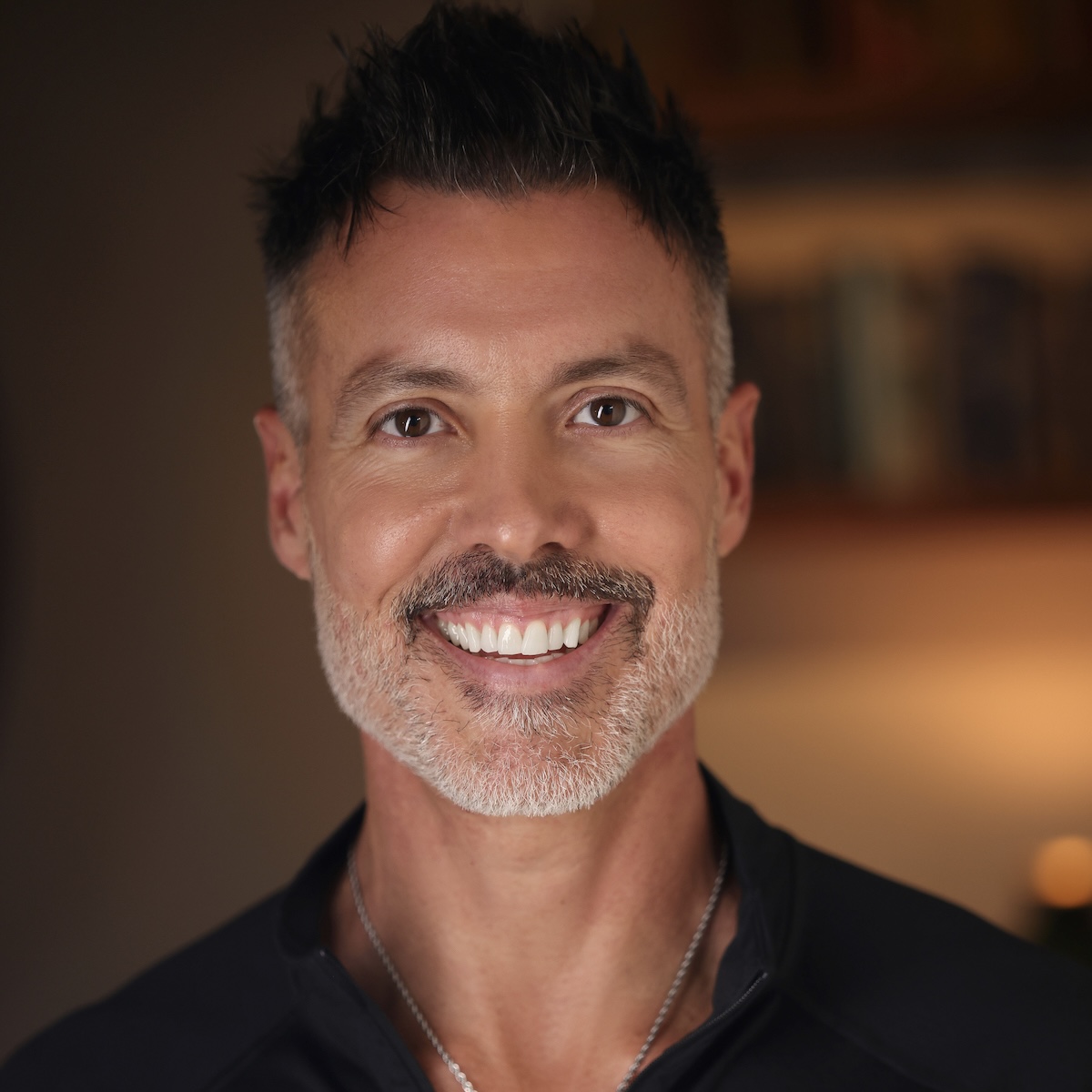
Chris Tompkins is a Licensed Marriage and Family Therapist based in Los Angeles, CA, specializing in gay men’s identity and religious trauma. He’s also the author of the award-winning book Raising LGBTQ Allies: A Parent’s Guide to Changing the Messages from the Playground. In addition to being a therapist, Chris is a writer and public speaker. His work has been featured on TEDx, NBC, HuffPost, Psychology Today, The Advocate, and more.

