176. Navigating Disordered Eating Among Gay Men (with Kyle Ridley)


In previous episodes, we’ve explored the unique body image pressures placed upon gay men, from the intense focus on gym culture and the idealized twink aesthetic to broader societal expectations and body obsession. These pressures can contribute to disordered eating, a struggle that is often overlooked in men despite its prevalence in the gay community.
In this episode, Kyle Ridley, an Emmy Award winning journalist, joins us to discuss his personal experiences with disordered eating, the unique body image pressures faced by queer men, and strategies for navigating these struggles.
Related Episodes:
- Listen to Episode 32. Gay Men and Body Obsession
- Listen to Episode 82. Gay Gym Culture
- Listen to Episode 91. Fat and Fabulous: Embrace Body Positivity (with Matthew Simko)
- Listen to Episode 130. Pride in Motion: Inclusive Fitness and Body-Positive Coaching (with Roy Belzer)
- Listen to Episode 151. Twink Death: RIP Skinny Jeans
Additional Resources:
- The Pressure to Achieve Perfection: Body Obsession in the Gay Community and Its Impact on Self-Worth
- Navigating Gay Gym Culture: Body Image, Societal Masculinity, and Mental Health
- Embracing Body Positivity in the Gay Community: Redefining Beauty Standards and Championing Self-Love
- LGBTQ+ Body Image: Embracing Body Positivity and Redefining Fitness Standards
- Twink Death: Navigating Aging, Aesthetics, and Body Image in Gay Culture
- Learn More About Kyle Ridley
- Subscribe to The Tangle with Kyle Ridley
- Follow Kyle on Instagram
- Connect with Kyle on LinkedIn
Lead to Gold
This is what wellness looks like in real life - no social media BS. ✨
Listen on: Apple Podcasts Spotify
00:00 - Snarky Opener
00:29 - Episode Introduction
01:18 - Gay Men and Eating Disorders
01:53 - Tarot
02:53 - Guest Introduction
08:02 - Gay Body Image Pressures
12:56 - Masculinity & Disordered Eating
15:50 - Male Eating Disorders in Media
18:04 - The Myths About Men & Eating Disorders
18:04 - [Ad] Lead to Gold
18:52 - (Cont.) Male Eating Disorders in Media
21:51 - Body Positivity & the GLP-1 Era
23:53 - Finding Support for Eating Disorders
31:34 - Episode Closing
33:04 - Connect with Kyle
34:11 - Connect with A Jaded Gay
Snarky Opener (0:00)
Kyle Ridley
When you are living in secret, you're kind of living in shame. I realized that I was hiding stuff that I felt ashamed of. So, bringing that shame to the surface really opens the door to healing.
Episode Introduction (0:29)
Rob Loveless
Hello, my LGBTQuties, and welcome back to another episode of A Jaded Gay. I'm Rob Loveless, and today I am a non-jaded gay because it's now official.
This summer, I will be studying abroad for a week for my MBA program in Morocco and Portugal.
And I am super excited, but a little nervous, because I'm not a huge fan of flying, especially for a longer flight like that.
But this is a really great opportunity, and my program covers a good chunk of the cost, so I didn't want to pass this up.
Really, the only thing I have to pay for is my plane ticket, which I'm starting to save up for, because I looked at some flights, and it is not cheap, especially for direct flights.
I did find some more budget-friendly options, but that's because they involve multiple layovers that result in 55 hours of total travel time just to get to Morocco. Yeah, no, thank you.
So just a friendly reminder to subscribe to my Patreon so I don't have to book that flight
Gay Men and Eating Disorders (1:18)
Rob Loveless
Anyway, today, I am excited to have a very special guest joining us.
He is a fellow podcaster and hosts some amazing conversations with celebrities, ranging from topics that are fun and lighter to heavier and emotional.
And today, we are diving into something heavier, and that's disordered eating in gay men.
And in one of our early episodes, we touched upon disordered eating as part of the larger conversation around body image and gay men.
But today, we're going deeper into it and talking about both of our personal experiences. So, I'll be bringing him on in a minute.
But before we do, you know the drill. Let's pull our tarot card.
Tarot (1:53)
Rob Loveless
So, for this episode, we drew The Emperor, which is a Major Arcana card. And it's indicating something big in our lives, and it's full of masculine energy.
And just a reminder that in tarot, masculine energy doesn't equate to societal labels of manliness. Instead, it's energy that symbolizes traits like logic and outward focus, and it's inspiring us to take action.
Traditionally, emperors were viewed as very authoritative figures. So, this card can represent us or someone in our lives.
It's number four in the Major Arcana, and in numerology, four is tied to structure and stability. So, this card is encouraging us to take action from a place of personal power, instead of reacting out of fear.
And while The Emperor is tied to literal leadership, this card also reflects our role as a protector or steady support for those around us.
It reminds us that we have the power to bring stability to chaos by establishing our own structure and sense of order.
And The Emperor also embodies wisdom and acts as a source of guidance that others may look to for support, so there's an equal balance of creating order for ourselves and stability for others.
Guest Introduction (2:53)
Rob Loveless
And with that in mind, let's get into the conversation. And just a quick disclaimer. Obviously, we are talking about disordered eating, which can be very triggering for some listeners.
I understand this is an extremely sensitive and sometimes uncomfortable thing to talk about, so please check in with yourself to see how you're feeling. And obviously, listener discretion is advised.
But getting into the episode, I am very excited to welcome our guest. He is an Emmy award-winning journalist and host of The Tangle with Kyle Ridley.
Please welcome Kyle. Hi, Kyle. How are you today?
Kyle Ridley
I'm doing great, Rob. How are you?
Rob Loveless
Doing well, thank you. It's a snowy day here in Philadelphia, so very relaxing. I like to kind of stay inside, not have to leave the house, and do too much.
So hopefully you're having a nice, relaxing kick off to your weekend as well.
Kyle Ridley
Yeah, same. It's flurrying here in the DC area. Not really sticking, but it's nice and cozy. Good day to stay in.
Rob Loveless
Definitely, definitely.
Well, I'm very excited to have you on the podcast today to talk all about your amazing podcast, and then also we're going to go a little deeper to talk about disordered eating within gay men, which is something that we both have personal experiences with.
Before we get too heavy into it, though, I do just want to start off. Can you introduce yourself to all the listeners? Tell them your background, pronouns, career, all that fun stuff.
Kyle Ridley
Yeah. Kyle Ridley is my name, and I am a TV producer. I've been in journalism for about 20 years.
Started in print journalism in high school, and then worked in local broadcasting in the DC area for about a decade.
And now, newly in my 40s, and launched a media company and my own podcast, which is called The Tangle with Kyle Ridley, and it's a celebrity-driven podcast.
A lot of LGBTQ celebrities, but also just some of my favorite comedians and actors and actresses.
And we just get tangled in the highs and lows of life, everything from, you know, the deepest despair we're in to the things we're loving.
One thing I ask all my guests is what they're currently tangled in, that they're loving, and then something negative or frustrating that they need to get untangled from.
And sort of my new era of being in front of the camera, you know, because I've spent so many years behind the camera with producing TV and preparing anchors for interviewing.
Now I'm taking the reins with that.
Rob Loveless
Awesome. And just how you ask all your guests what they're currently tangled in, I like to ask all my guests: today, are you a jaded or non-jaded gay, and why?
Kyle Ridley
I really try my hardest to be not jaded. I think we we've been put through the wringer these last several years, and nothing seems to be letting up.
But that's something I also try to work into every one of my podcasts is asking my guests how they're maintaining hope in these heavy times. And so, I try to cling to hope no matter what we're going through.
So, I'm always hope-filled, even if you know, things seem hopeless. So, I try to hold on to that and not, not let myself get jaded.
Rob Loveless
I love to hear that. And I love your podcast, too. You launched it last year, The Tangle with Kyle Ridley. Like you said, you cover a variety of topics with celebrities.
Most recently, you had on Tom Arnold, Candice from Real Housewives of Potomac, and also The Traitors. So, all my Bravo fans, you should definitely be checking the podcast out.
And just some really great guests, Margaret Cho, Ross Matthews. And within all those episodes, I think you said you also dive into all things, both superficial and deep.
So, while there's some fun conversations up front, you're not afraid to kind of peel back the layers, get into the emotional pieces.
And this year, you had mentioned you're opening the dialog to conversations about health and identity within the LGBTQ+ space, including disordered eating within men, which, like I said, is something you and I both struggled with personally in the past.
So, can you share a little bit about your experiences with disordered eating and how it started?
Kyle Ridley
Yeah, that's, that's a it's hard to really encapsulate the whole thing, but it's probably been my whole life. I think for most people, it starts in childhood. And for me, I'm 41, born in 84.
And growing up in the 80s and 90s, that diet culture was heavy on all of us.
You know, we had heroin chic and diet, new diet pill every week, and then it was, you know, Atkins, and there was just a different crash diet that you would try every week. And I wasn't immune to that.
So, I think just seeing it in my family, particularly, I've had people struggle with eating disorders, and then, and just in the 90s culture, you'd see people in school doing it every week, and your classmates.
And there's always just so much pressure, I think, in school in general, to be cool. And then on top of that, you're the gay kid in school, and then on top of that, you're the chubby kid in school.
It just added up to a lot of insecurities, where by the time I was late in my teens and then early 20s, is where it really developed into an addiction.
And specifically, I struggled with bulimia, probably throughout, throughout my 20s, definitely.
Throughout my late teens and 20s, into my like... 30 is when I started to really get help and realize this is controlling my life.
Rob Loveless
Thank you so much for sharing that. And when you're speaking through answer, there a few things jumped out to me.
Similar to saying how you were, you know, the chubby gay kid in school, I relate to that very much so. Every one of all my friends were very athletic and thin.
And then here I'm the, you know, heavier kid. I also hadn't gone through puberty yet, so I'm still sounding like a 12-year-old, while all the other kids seem more grown up, and then obviously closeted.
And I think there's a very heavy layering sense of difference there. Of being different or othering yourself.
So, while there may be separate pieces of that, it kind of combines to feel this giant sense of otherness on top of you.
Some things you can't control, and then some things, unfortunately, like body weight, you can control to some degree, in either healthy or unhealthy ways.
Like we had said up front, talking through the podcast, we had a few episodes on body image, and it seems that there is increased body image pressure on gay men compared to straight men.
Gay Body Image Pressures (8:02)
Rob Loveless
So, with all that in mind, I was wondering, how has your identity as a gay man influenced your relationship with your body and eating?
Kyle Ridley
I don't really think I've embraced my sexuality, probably till my late 30s, early early 40s. I'm 41 now. I came out when I was 17.
At that point, I would probably still that the chubby kid in school, I was a junior in high school. And just have always kind of felt outside of the LGBTQ community. We're taking it back to the early 2000s.
I, you know, to be honest, I was in a relationship with someone much older than me, from 17 to 22, 23. Taking it from 17 someone who was in their 40s.
So, in a way, I was isolated, in that sense, because I was in such an adult relationship, and with that, thought I was so adult at the time and could handle it, and then kind of lost myself in that relationship.
And with that, turned to eating and disordered eating, and turned into binging and then purging, and then over-exercising. And then I think in that relationship, he also battled severe mental health struggles.
So, it was like both of us were struggling. We couldn't help each other, and we felt like we needed to be the savior. And in the end, we both kind of lost ourselves.
And then when we broke up, I finished college. I think something with a lot of people with disordered eating is they have this hidden secret, but they're so high-achieving in all their other aspects of life.
So, you know, I graduated summa cum laude, perfect 4.0, and got a nice job at a school, and maintained my freelancing journalism and worked my way up the corporate ladder, but I wasn't addressing the internal struggles that I was having.
It was all coming out, and binge eating and isolating, and my life was focused solely on food. And something that I always yearned for was community.
I didn't have community throughout my 20s or 30s, because I was in relationships, and then the other relationship was my eating disorder. So, it wasn't until my late 30s that I went through a divorce.
I was with my husband, former husband, for 12 years, married eight years. And one thing that we struggled with was having gay friends, because we weren't in the scene.
We didn't go to the city, we didn't go to gay bars. I don't want to speak much for him, but that was a struggle for him. I don't think he really identified with the community.
And so, you know, in couples therapy, I would talk about, we need to build community. We're getting older, our straight friends are getting married. They're having babies. We're not seeing them as much.
What are we going to do when we're in our 50s, 60s? And it wasn't really until I got divorced that I dove into that community hub first and found my community, and with that, found my tribe.
Took a couple decades, but also with that, found more confidence in who I was and with my body and with how I present myself, whether I'm bigger or smaller. So, it's been a long journey. It's been a really long journey.
Rob Loveless
I bet. And I feel like that sense of finding your community is an ever-evolving landscape where even if you are somebody who's involved more in the party scene or whatever, in your early 20s, you may change.
The people around you may change. And we don't have the traditional life milestones that many of our heterosexual peers do.
So, you're constantly seeking that sense of community as you get older, and find those people you either grow with or that you grow into.
But I feel within that there can sometimes be some additional pressures.
You know, we tend to see, if you think of stereotypical gay representation, you think of the shirtless go-go boys, the, you know, hulked out gym guys.
And for myself personally, those are things that sometimes I can see something like that, and think, yeah, that looks nice. But also, now I'm feeling self-conscious because I may not look like that.
So, for yourself, personally, have you noticed any queer-specific triggers or pressures when it comes to body image?
Kyle Ridley
I think right now, fortunately, at this place, I, I'm not feeling really pressures. I, you know, I am in the scene a bit. Weekends, you know, we all have jobs, but I still go out sometimes, and we'll go dancing.
And I see the dancers, and I see the six-pack abs, and where I might have felt intimidated when I was younger, and I don't think I even took my shirt off at the beach till I was in my 30s.
I see it now and am like, well, that's not me, and it's never going to be me, and it probably could be me, but I don't want to be addicted to the gym like that.
I don't want to focus solely on getting that rock-hard body. And you know, when you're on the apps, and you're dating again, I actually find that's not who I'm really drawn to.
So, I'm comfortable with who I am, and also comfortable in my type, which is probably more of, like, the average every day, you know, type of guy. Guy next door, if you want to click that on the app.
So, I there's room for all. I fortunately don't feel pressure, and I don't feel intimidated. I have friends that do they, you know, they're at shirtless night or something, and they won't do it.
It's like, look at everyone else. This should just be a community of acceptance. I don't want anyone, uh, pinning each other against. This is, uh, we're a minority. We've been through enough.
There is room for all. We need to embrace all types. So, I think that's where I'm at right now. No pressure.
Masculinity & Disordered Eating (12:56)
Rob Loveless
That's great to hear. And agreed. There's a lot of scrutiny on our community, especially in the past year, past months.
And so, we're already such a targeted, maybe community that we really can't be there, dividing ourselves up even further.
And I think traditionally, when you hear about some of the terrible insinuations people make are how a gay man may not seem masculine, they may seem effeminate.
And because of that, some of us may struggle with internalized homophobia, our own concepts of masculinity, whether we adhere to it, whether we're forcing ourselves to be a more masculine version of who we are that doesn't feel natural.
Or whether we're on the more feminine end, and then being bullied within and outside of our community for that. So big picture, not just in the gay community, but just in society as a whole.
How do you think those expectations of masculinity shape men's experiences with body image and disordered eating?
Kyle Ridley
I think they're pretty, pretty vital in the detriment when we're younger, when we don't know how to probably accept ourselves.
Then we're relying more on others who are judging us, and we're taking their words to heart, which we shouldn't be. I hated my voice, probably the first 30 years of my life.
I think we hear ourselves on an answering machine or a voice text, and it's like, is that me? That gay voice? They're just, the older I get, the more I find it's true.
When we're younger, we hear people say, oh, you reach a certain age and think you just don't give a shit anymore. And I think that's true, fortunately.
Sadly, it does take a long time, but I don't care how I sound now.
I know I present a little more feminine, and probably more so when I was younger and had a higher voice, and it was probably my downfall in a lot of ways, and I fought against it.
And, you know, as a teenager, I struggled with depression and OCD, and I think a lot of that stemmed from bullying. I'm sure that I know there's still a lot of bullying, but in the 90s, it was severe.
You know, everyone was gay, or the F word was thrown around like anything. And now I think people have risen up against that, and there's a lot more acceptance.
And I think media has embraced it and tried to teach people, I'm thinking of like Heartstopper, the TV show. If that had been around that provided so much hope, I think, for this generation.
But yeah, I've always felt more feminine and fought against that for a long time, and now I realize it's kind of a gift that's my specialty. I'm I can be everything, though I'm multifaceted.
So, I can be feminine and nurturing and a caretaker to my dogs, and sort of the ring learner in that sense.
And maybe in my group, I'm like, oh, I'm the organizer, and maybe people see me as like the parental mom or dad figure. But I also know there's masculine sides of me and aggressive sides of me.
So, I think embracing all of our parts and discovering those parts and not pushing them down, I think I pushed a lot of those parts down for a while, and then you realize you can't really live in that survival mode, that fake mode, that mask, because it's it gets tiring.
Your body gets exhausted, your mind gets exhausted, your heart gets exhausted.
Male Eating Disorders in Media (15:50)
Rob Loveless
And to your point, masculinity, femininity, it's a spectrum. I don't think anybody, I mean, maybe some people, I don't think anybody fully adheres to one or the other.
There's parts of us that may fluctuate whether we lean more masculine or more feminine, but it's all just a blend at the end of the day.
And going off of that, you had mentioned Heartstopper, which I think it was the most recent season, the one main character is struggling with some eating disorders, which, for myself, is the first time I really saw male representation on TV of somebody openly struggling with that.
Because for so long, anorexia was a woman's disease. Men shouldn't have to care about their bodies. They're big and tough.
So, I was curious, going off of that as a journalist and storyteller, seeing things like Heartstopper, how has your professional lens shaped your understanding of eating disorders in men?
Kyle Ridley
I think it's still very slow to come to the surface in media. I was so thrilled with Heartstopper.
They handled it so delicately and just the way the characters communicated with each other, and how thoughtful they were in addressing it. It's, it was very it's, it rang very true to life, in my sense.
Because I think when someone does notice you're struggling, that is the way to approach them, with love, with understanding, with an open hand, and not a judgment or a plan like this is what you need to do. I think sometimes people get caught up in that and trying to fix someone, but a lot of times it they really just need you to understand and lean, lean your heart and your hand out to say, I know something's going on, and I'm here for you.
Because it's a slow process to even accept that you have a problem and then admit you have a problem to others.
And it was the same for me. That was the first media representation I've seen of men struggling on film or TV.
I hope more come to the surface, because it's not that uncommon. It's uncommon for people to speak out about it, because I think there's such a stigma. But it's, it's worldwide.
You know, women just aren't immune to it.
These body image struggles, especially in the gay community, I have friends that will hint about it or talk, or maybe just like downplay themselves or degrade themselves in a humorous way.
There's a lot lying underneath that. So, I think the conversation needs to be brought to the surface for people to really understand it, and then for others to hopefully admit it and get help.
The Myths About Men & Eating Disorders (18:04)
Rob Loveless
And are there common misconceptions society has about men and eating disorders?
Kyle Ridley
Well, I think one would be that every all men with eating disorders are gay, because it's prevalent in the straight community as well.
Especially, you see those gym bros, a lot of those six packs and those rock-hard bodies, they're not they're oftentimes not natural. Maybe the disorders aren't...
The disorder just takes shape in so many ways. Bulimia can be overeating and binging and purging. It can be under-eating and over-exercising.
I think the body image with men, straight men, bodybuilders, is a big red flag that is has just been gone ignored for so long.
I think because, oh, they're masculine, they're big, they have a lot of muscles, they're fine. There's a lot of struggle underneath that. There's a lot of obsession underneath that, from all sizes.
So, I think the other misconception is that people with eating disorders are super thin and rail-thin, and you can tell because they look a certain way.
That's not true. I've struggled with eating disorders and been overweight. I think it's, it runs the gamut.
Rob Loveless
And that's a big one. I think people equate anorexia with a certain body type, as opposed to a struggle with body image emotionally, that can result in various ways, physically.
Like you said, whether you're somebody who's a big muscle person who maybe has not healthy relationships with either the supplements or the nutrients they put in, or somebody who's over-exercising and under-eating, so it doesn't equal one thing.
Looking though, specifically at the queer community today, what gaps remain in addressing body image and eating disorders?
Kyle Ridley
Well, I don't think there's an open dialogue about it. I spoke about it or posted about it a couple years ago on my Instagram.
I haven't spoken about it in depth, but I made a post because it was like the 11th or 10th year of me not purging, and I received a couple private messages from men saying that they struggle with it, too.
And a couple of them are close friends of mine, and we hang out in groups. But it also still goes unspoken. It's not something that I find people really want to talk about.
They'll send me a message, and that's sort of it. And if it is addressed in a group setting, it's downplayed or run over pretty quick. It's just a taboo subject.
And I think that might mean a lot of people actually deal with it more than we think, and just don't want to discuss it, or don't know how to discuss it.
That's why, like, I'm trying to pitch some TV stations right now, because I never see it on TV. February is National Eating Disorder month. I never see men talking about it.
And as a TV, former TV producer for 10 years, I received pitches all the time. It was always women spokes, spokespeople, nurses, women that struggled with it.
And I would be like, can you bring a man on? It's, it's, they're not that forthright coming forward.
I want more, more of us to come forth, because I think that's going to help more people and bring more more of it to light and help people realize there's a community that we should embrace and help.
Body Positivity & the GLP-1 Era (21:04)
Rob Loveless
Absolutely. And to your point, working in media, I feel like for so long, it wasn't until more recently that body positivity gained more traction in mainstream media.
But especially in the 90s and 2000s, it was like the rail-thin person, both male and female, and that was the body image that was being pushed upon all of us.
So, through your career in media, and then now with the podcast, have you noticed a shift in terms of body positivity, and how do you see that being promoted online, whether it's through social media, podcasts, online platforms?
Kyle Ridley
It's been a roller coaster. It's been a pendulum. I think, you know, we've had years where we really embrace big bodies and what butt injections, big boobs, voluptuous.
And I think right now we're in a scary downfall where GLP-1s and celebrities are back to being rail-thin.
And it's because of these medications, which I think can help a lot of people, but when you see people clearly underweight and unnatural looking, it's scary. It's like, when is this going to become the new normal?
When is the tipping point going to happen? Are people going to start getting sick? Are they going to start getting addicted?
I don't want to name any celebrity names, but you can see, like these sunken-in faces and these rail-thin bodies. It's scary. It's almost worse than the 90s at this point.
So, I think it needs to be readdressed, and it needs to be brought back to the public, because we're in a weird time right now.
Rob Loveless
Definitely. And like you said, we had a few years of the body positivity movement, and I think we're at this point now where we're wondering what happens to that now with these medications out there?
And again, for people who genuinely need them, of course, they're vital and important.
But there are people who probably don't need them and are abusing them, who maybe are just trying to lose those last five pounds, quote unquote, and then taking it much further.
And it's also, I think, creating a dangerous conversation around weight loss in general, where if somebody loses noticeable weight, the question is, oh, are you taking Ozempic? Are you taking this?
Which can be kind of damaging and highly personal to really have somebody pry into that. You don't know what may be going on health-wise behind their weight loss.
Finding Support for Eating Disorders (23:06)
Rob Loveless
So, I think as we're navigating this, it's even more important that we continue to speak out on platforms. Like you said, you had shared the anniversary the last time you had purged.
And I think that kind of visibility is so important, because for a lot of people, especially men, you don't really know what resources there are to help treat this disease.
So, with that in mind, how would you encourage queer men to seek help in a society that often stigmatizes vulnerability in men?
Kyle Ridley
It took a long time for me to get help. There's so many outlets to get help, in treatment, outpatient therapy. I am the type of person, I battled it for seven or eight years.
And this was a daily thing. It was a daily I lived for my next binge. I lived for my next purge. I isolated. I didn't do social stuff. I didn't go to restaurants.
I worked, and then my focus was being at home and eating food. And it's was my comfort, just like a drug. I think my wake-up call was my mom, who knew I battled issues, but didn't really know the extent, because we weren't living together.
And she actually approached my ex-husband, who I was hiding it from at the time.
And my ex-husband, I think, had a feeling that something might have been going on just from the way I looked and my particular eating, but he didn't know the extent that I was secretly binging, purging all the time.
So, I had like an intervention, and I was so scared of losing everything. I was scared of losing my health at that point. I think it was kind of a scare tactic. And also, I was scared of losing my marriage.
That was really something I held true. So, I went to therapy. I did not go to inpatient. It was recommended I do.
I think that is important for people, because not everyone can do it on themselves, but I did really work hard on myself to do it cold turkey, to go to therapy, to start researching nutrition and exercise routines.
It was not fast. It took years for me to get out of binging and purging, because after I would say, stopped my bulimia in terms of that, then it became more, I became more focused on what I was actually consuming, focusing on nutritional values and the good foods versus bad foods, which I realize now are not bad foods.
But how do I recalibrate what I'm eating on a daily basis if I'm not throwing up? How do I renourish my body? And that took years.
And you sort of incorporate more foods over time that used to be your, you know, your fear foods. And then opening up with friends, I still hid it from friends for many years in my recovery.
Probably almost a decade, probably till I made that post where people had no idea what I had ever been going through. And I really want that to stop. I want people to be able to talk about it.
Especially gay men, we have these communities. We're out all the time. We're going to brunch, we're dancing, we talk about these things.
I'm sure if you open up, there's going to be someone who at least has related to on themselves, or know someone who has experienced it. And there isn't judgment. I have not had anyone judge me for it.
There's also so many other resources. So, someone that I follow on Instagram, his name is Jason Wood, and he works with the National Association of Anorexia Nervosa and Associated Disorders, and it's called ANAD. A-N-A-D.
I encourage you to follow them. They have so many resources, statistics, how to get help. And there's obviously the National Eating Disorder Society. But I think the first part is actually opening the dialogue.
Obviously, have to admit it to yourself. I always knew I had a problem.
I think the the ringing in my ears was like, okay, I'll I'll start Monday, just like a diet. I'll get better Monday. I won't purge. Okay. No, this month is ruined. I'll start February 1.
But it was always in the back of my head. I never expressed that to anyone. I think once you bring that out into open and you let people know and hold yourself accountable, I think that also helps.
But when you are living in secret, you're kind of living in shame. Secrecy and privacy. There's a, there's a big difference, I find. They say that secrecy is riddled with shame, and privacy is more about respect.
I realized that I was hiding stuff that I felt ashamed of. Not because, oh, I just want to keep that from people, and that's private. It was because I was ashamed.
So, bringing that shame to the surface really opens the door to healing.
Rob Loveless
And in your answer, they were talking about going to therapy. I think that's really important to bring up, because, again, this isn't something you address by Okay, well, now I'm just going to start having a healthy eating routine of not purging or not starving.
It's something emotionally you actually need to work through, because there is usually a larger emotional cause behind it.
And when we were talking about the title for this podcast episode, you had mentioned changing the word from overcoming to navigating, because this is something that you continue to work with on a daily basis.
And no matter how long it's been or how hard you work at it, those thoughts can still creep into your mind. Like for myself, I know sometimes, if I think I eat too much, those feelings of guilt come in.
Or there's a fear of, oh, I need to go to the gym ASAP tomorrow to, you know, work this off. Or I need to make sure I'm putting in the effort at the gym to keep my body looking a certain way.
And if you're not careful, it can be easy to slip back into those negative patterns.
So, I was curious, with that in mind, are there small daily rituals or practices that help you maintain a healthy relationship with food and your body?
Kyle Ridley
I do work out most days of the week. I find that I need that for my body and my mind, specifically, because you can get in the lows and those depths of despair when you're feeling sluggish and eating what you want.
But that is the thing, I don't think I'm ever going to be healed. I've totally overcome my eating issues because you're always eating.
I think that kind of leads people to think, oh, you can eat what you want. You don't care. You're not looking at calories or anything. It's not true.
Unlike a heroin addict or a drug addict or an alcoholic, where they cannot touch the thing forever, and they're still in recovery, I'm touching food every day.
So, for me to think that, oh, I can eat this. I'm healed. I don't care what I'm eating. No, I still look at nutritional content. I'll still look at the menu and try to choose the healthier thing.
You know, I avoid some foods. I, you know, I'm not a big sweets person. I'm not indulging in candy bars and fast food like I used to when I was young. You also know better.
You know what your body is going to react to. You know how you're going to feel the next day, your mind and body.
So, but there's also times where we have to give in. Where you're like, okay, I do need a cheat day. I'm going to order an over amount of food, and I'm going to skip my workout.
I'm going to watch TV and binge, and I'm going to feel not great tonight, but that's what I want to do. It's going to soothe me, and I'll get back on track tomorrow, but I'm not going to let that consume my every day.
I'm not going to let that bring me down. I'm not going to let that make me run to the toilet after. I'm aware of everything that I'm doing now.
So, it's kind of, it's more of an acceptance of where you're at. But no, you're never healed.
You're never just going to be like, I'm good. I can eat everything I want now, and I don't care. No, you're too knowledgeable for that.
Rob Loveless
Absolutely. And if you could share one message with listeners who might be silently struggling with disordered eating, what would it be?
Kyle Ridley
I really, I don't have the answer.
All I want is for people to reach out, whether it's to me or to someone else or a stranger online. I have found sharing your story really is healing in building community and building support.
I have had no one cast me aside. I think everyone, anyone that I have spoken to privately or even posted about, I've only been embraced, and it's only heightened the support.
And I think with that comes a lot of strength and what you can do for yourself, because so many people encourage you, and I think that, in turn, makes you feel more powerful in what you can do.
Episode Closing (30:47)
Rob Loveless
And connecting it back to the tarot, The Emperor is full of energy that empowers us to act from a place of strength and confidence, which allows us to be a leader and protector for both ourselves and for those around us.
We have the wisdom and logic to turn chaos into stability by establishing our own structure and sense of order.
And tying it back to our conversation with Kyle, I think many of us grew up in a time where there were very strict ideals about what our body should look like, both at a societal level and within the gay community.
Especially in the 90s and early 2000s, the idealized male body was thin and toned and hairless. And the reality is that may not be something our bodies reflect.
And that's okay. Because our worth isn't tied to our bodies, and our bodies are beautiful at any size.
While it may be difficult, we can establish our own structure around what we define as healthy body image for ourselves, so that way, we can live happy and confidently.
And that sense of confidence can be contagious. If we're living confidently in our bodies, other people will see it and realize they can as well.
Like Kyle said, for so long, there haven't really been conversations around body image struggles and disordered eating among men, let alone gay men.
But I think things are starting to shift with us seeing representation around this in shows like Heartstopper or hearing people like Kyle using their platform to bring awareness to this.
There's strength in being vulnerable, and sharing these experiences reminds us that we're not alone.
Body image struggles and disordered eating aren't uncommon, but by chipping away at stigma and sharing our experiences, we can create conversations that lift each other up.
It helps create a sense of stability in the chaos, and reminds us that, just like The Emperor, we can be a protector, not just for ourselves, but for those around us as well.
Connect with Kyle (32:17)
Rob Loveless
Well, Kyle, thank you so much for joining us today.
This was obviously a very heavy topic, but something that's so important to talk about, since we're not hearing these kind of conversations or really seeing this representation for men, let alone queer men.
As we're wrapping up here, can you please let all listeners know where they can connect with you and the podcast and plug all the things?
Kyle Ridley
Sure. I probably mostly, you can follow me on Instagram. It's just my name, Kyle_Ridley with an underscore.
You can follow me on TikTok if you search for The Tangle with Kyle.
I'm also on YouTube, just search for The Tangle with Kyle Ridley, and then wherever you get your podcast, it's called The Tangle with Kyle Ridley.
And yeah, I'm trying to cover all the bases, but we have a lot of fun guests, a lot of celebrities. A lot of LGBTQ guests, like Dustin Lance Black. Oscar winner, he wrote Milk.
One of my favorites, uh, Ross Mathews, Jeff Hiller, Carson Kressley. I'm a '90s boy, so I had Danny Roberts from the Real World New Orleans. That's one of my favorite episodes.
But, yeah, we have, we have lots on there. It's really fun, really fun show.
Rob Loveless
Definitely. It's one of my favorite shows listen to in the morning while I'm at the gym. It's the first thing I tune into.
So definitely, for all the listeners out there, all the information will be in the show notes. So be sure you connect with Kyle and check out The Tangle with Kyle Ridley.
Connect with A Jaded Gay (33:24)
Rob Loveless
And for the podcast, you know the drill. If you have any questions or feedback, you can reach out to me rob@ajadedgay.com.
Also, let's keep the conversation going. Head over to our official Discord server, the LGBTQuties Lounge, to connect with myself and other listeners.
And while you're doing that, please remember to rate, review, and subscribe. Five stars only. I greatly appreciate it.
For more information on this topic, our guest, episode resources, blog posts, merchandise, links to socials, all that fun stuff, you can visit the website ajadedgay.com.
You can connect with the podcast on Instagram, TikTok, SoundCloud, and YouTube @ajadedgay. You can follow me personally, Rob Loveless, on Instagram @rob_loveless.
And if you're feeling generous, consider supporting the podcast on Patreon for as little as $1 a month. That gets you instant access to episodes ad-free, a day early, plus exclusive monthly bonus content.
Or if you just want to access the monthly bonus episodes, you can purchase them for $3 each.
And if you're scared of commitment, don't worry. I get it. You can make a one-time donation on Buy Me a Coffee for any dollar amount. And both the Patreon and Buy Me a Coffee are @ajadedgay.
And remember: every day is all we have, so you gotta make your own happiness.
Mmm-bye.
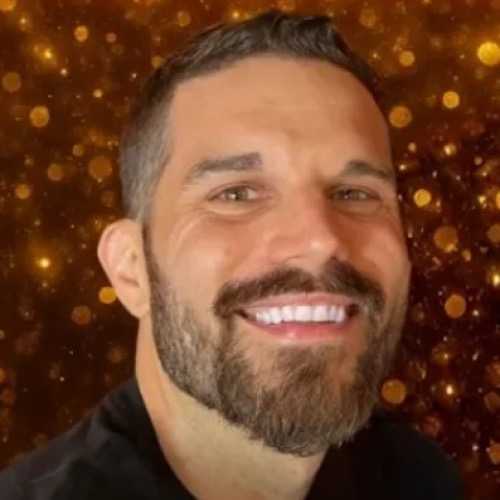
Kyle Ridley is an Emmy Award-winning journalist and producer with more than two decades of experience across print and television, beginning with freelancing in arts and entertainment reporting in high school and advancing through internships at The Dr. Phil Show and NBC Los Angeles before returning to the Washington, D.C., area to build a career in local news. He has produced thousands of live segments and created acclaimed work for stations including WJLA ABC7 and Good Day DC on WTTG FOX5, notably earning Emmys for series like The Mother Side. Passionate about storytelling beyond the control room, Kyle now shares his expertise through media coaching, freelance writing, podcast work, and is authoring a memoir of personal essays. He lives in Maryland with his three rescue dogs.