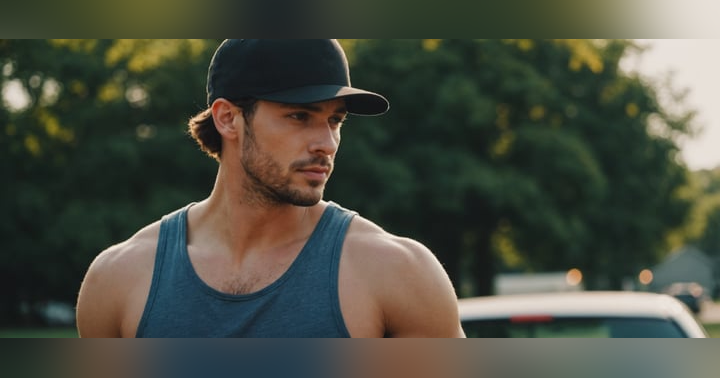
170. Why Am I Attracted to Bros?


In previous episodes, we’ve explored how different expressions of masculinity, from archetypes like Castro Clones and metrosexuality to gym culture, intersect across the gay world. Within subcultures such as bros, leather, and bears, masculinity is often elevated, creating a complex dynamic where gay men are both drawn to and shaped by these ideals.
In this episode, we’re unpacking bro culture and exploring why gay men may be attracted to masculinity, whether that attraction stems from biology, societal influence, or internalized homophobia, and how we can stay authentic to ourselves in the process.
Related Episodes:
- Listen to Episode 11. Overcoming Internalized Homophobia
- Listen to Episode 81. Are Mustaches Gay?
- Listen to Episode 82. Gay Gym Culture
- Listen to Episode 89. Beyond the Brawn: Redefining Queer Masculinity (with Erick DuPree)
- Listen to Episode 92. Metrosexual Madness
- Listen to Episode 104. The Castro Clone Wars
Additional Resources:
- Bro (Etymology)
- The End of Bro
- Bro (Definition)
- How the Bro Became White
- Bro Culture
- Jeah! We Mapped Out The 4 Basic Aspects Of Being A 'Bro'
- Meet the Gaybros
- r/gaybros
- Consistency in Preferences for Masculinity in Faces, Bodies, Voices, and Personality Characteristics Among Homosexual Men in China
- Self-Rated Attractiveness and Sociosexual Behavior Predict Gay Men’s Preferences for Masculine Cues in Male Voices in China
- Gay and Straight Men Prefer Masculine-Presenting Gay Men for a High-Status Role: Evidence From an Ecologically Valid Experiment
- Embrace the Leadership Challenge: The Role of Gay Men’s Internalized Sexual Stigma on the Evaluation of Others’ Leadership and One’s Own
- The Relationship Between Masculinity and Internalized Homophobia Amongst Australian Gay Men
- 30 Ways to Deal with Internalized Homophobia for LGBTQ People
00:00 - Snarky Opener
00:25 - Episode Introduction
02:32 - Gay Men and Masculinity
04:32 - Tarot
05:59 - What is a Bro?
08:36 - Biological Attraction to Masculinity
11:19 - Societal Attraction to Masculinity
16:00 - Masculinity, Power, and Perception
19:22 - Masculinity and Internalized Homophobia
23:01 - Healing Internalized Homophobia
26:02 - Episode Closing
29:19 - Connect with A Jaded Gay
30:52 - Outtake
Snarky Opener (0:00)
Basically, I'm looking for a guy who dresses like a douche bag but is actually a big ole teddy bear.
Episode Introduction (0:25)
Hello, my LGBTQuties, and welcome back to another episode of A Jaded Gay. I'm Rob Loveless, and today, I am a non-jaded gay because I'm feeling like I'm starting to connect back to myself.
So last year was super busy, and I realized that I was not necessarily taking care of myself the way I should have.
You know, I was getting up earlier and not setting like a healthy bedtime, so I wasn't getting enough sleep. And I was just rushing from one thing to the next, so a lot of my routines kind of fell off track.
But I realized that I can't keep pushing forward the way I had in the past, and so I'm trying to slow things down a little bit and also try to make time to have fun and make time for the things that make me feel good about myself.
And part of that is sticking with a routine and taking care of myself. So, I've gotten back into, like, meal prepping on Sundays for the week ahead, because I really wasn't doing that.
So, then I was either getting takeout or just eating crackers and hummus every night for dinner, which isn't the best thing.
And I have a pretty, like, rigorous skincare routine, but I wasn't really taking the time for that before I'd go to bed. So, I just, like, hop into bed and go to sleep.
Or I would just like, quickly put on some moisturizer or something. But I've gotten back to really taking the time to, like, get ready for bed, do my skincare routine, and set a healthy bedtime.
And I also realized I can't just keep trying to, like, trudge ahead without having any fun time for myself, because I was so burnt out, and it's not a great feeling.
So, I'm really trying to kind of just plan ahead a little bit more to make things more manageable, but also set aside time for me to have fun.
Because in the past, I would just, you know, when I got to my burnout stage, I would just plop on the couch and watch TV, but I wasn't really enjoying that, because I was thinking of like 50 other things, and I was checking my phone or checking emails.
So, I recently, just today, actually reached out to a place to kind of start up taking some voice lessons. I'm not a singer by any means. I'm not Madonna, but I can carry a tune.
And I used to take singing lessons way back when, when I lived in Jersey, and then back when I was in Pittsburgh for a little bit. And I just really like singing.
It's nothing that I'm planning on pursuing professionally, by any means, but it's just like music is a really relaxing thing to me, and I usually sing along to it.
So, I figured it might be fun to kind of just get back to that hobby, just do a couple singing lessons a month, and just have some dedicated time to actually sing and, you know, maybe improve a little bit.
And hey, maybe it'll even help the vocals for the podcast.
Gay Men and Masculinity (2:32)
Anyway, from raising our singing voices to lowering our speaking voices, today, we are going to be covering another masculinity-adjacent episode.
So, in the past, we've talked about queer masculinity in a variety of contexts, including metrosexuality, gym culture, and even facial hair. You know, you love a mustache.
And yes, we as gay men certainly have a complex relationship with societal masculinity norms. And for myself, I kind of had a little bro moment last summer.
You know, I was working out harder and liking the results I was seeing. And so, I decided I wanted to start wearing tank tops.
And not like gym tank tops to work out in, but actual tank tops as part of my day-to-day outfits. I mean, I figured if America was giving up democracy, then I could give up sleeves.
But then I started pairing the tank tops with snapbacks and white tube socks and sneakers and then a silver chain and bracelet.
Basically, I was dressing like the South Philly guidos I'm so desperately attracted to. I'm just lacking the sleeve tattoo currently. But dressing like that, I did feel a little something shift within me.
Like, I mean, of course, I was still shaking my ta tas to Kylie Minogue, so it's not like I was suddenly acting like some macho man or anything, but there was this sense of excitement or something I got from dressing kind of broey.
And I mean, I think we've all seen those gay bro thirst traps on Instagram, and there's no denying it's hot.
And I know in the past, I've talked about my own personal attraction to snapbacks, tattoos, and bad attitudes, but the curious thing is, I don't know if it's an attraction to the aesthetic itself, or if we associate the aesthetic to societal norms of masculinity.
And then that opens a whole other can of worms, because why might we find ourselves attracted to societal norms of masculinity?
Especially considering that for so many of us, those societal norms may not come naturally to us. And so, if we find ourselves attracted to masculinity, is that a problem?
Is it simply a preference, or does it signal something larger, like internalized homophobia?
So, we're going to get into it. But first, you know the drill. Let's pull our tarot card.
Tarot (4:32)
So, for this episode, we drew The Snapback in reverse. Just kidding, but we did pull a Major Arcana card, and that is The Magician in reverse.
And as a reminder, Major Arcana cards indicate big changes or life lessons.
And while The Magician is the second card in the Major Arcana, it's assigned the number one, which is tied to the individual and new beginnings.
Traditional depictions of this card show a magician with all four elements: Pentacles, Cups, Swords, and Wands.
So, there are elements of both masculine and feminine energies here, which are action-oriented and reflective, respectively.
However, the magician is holding a wand over his head, so while we get an elemental blend here, it is leaning heavily into the fiery suit of Wands, which represents passion, creativity, and sometimes sexuality.
There's also an infinity symbol over the magician's head that indicates that our energy is constantly flowing through us, and that we're full of it.
However, when we draw this card in reverse, it's indicating that we may be hesitant to take action.
We may be doubting ourselves and our abilities, and as a result, we may be fearful of how things may turn out. Additionally, our judgment may be clouded by greed, trickery, or manipulation.
So, it's really important that we lean into the feminine energies of this card, you know, Cups and Pentacles, to really get in touch with our intuition for our decision-making process.
And if we're able to reflect on our emotions and our work ethic and groundedness, then we'll be able to make the right decisions that are in alignment with what will bring us genuine fulfillment, as opposed to superficial happiness.
What is a Bro? (5:59)
So, with that in mind, let's start off by asking the question, what is a bro and bro culture? Well, I'm sure you all know that bro is short for brother. And this colloquial abbreviation dates back to the 1660s.
In fact, a 2014 Slate article cites a 1762 burlesque play titled Homer Travestie as an example where bro is used several times.
And Michael Adams, a lexicographer and English professor at Indiana University, explains that during this time, names were radically shortened, like William would be abbreviated to WM, and the same was done to brother, which is why we see the word bro appear.
Then, fast-forwarding to the 19th and 20th centuries, the definition of bro shifted beyond family and was used to mean a guy or fellow.
Also, the history is a little fuzzy, because I found some conflicting timelines, but it seems like the colloquial use of bro was used in African American culture and carried a strong sense of solidarity and kinship.
Then, during the social movements in the 1960s, the heavy use of brother helped propel the shortened bro into regular vernacular among activists.
And then an article in The Atlantic notes that in the decades that followed, and I believe especially in the 80s and 90s, African American culture was appropriated, and terminology like bro became widely used.
The article also notes that in the 1992 film Encino Man, Pauly Shore's character, Stoney Brown, frequently uses the term bro in a laid-back surfer dude manner.
And this apparently helped popularize the word. And this has evolved to what is known as bro culture today, which is a North American-specific subculture of young men.
And the original term of this bro lifestyle centered around partying, sports, and fraternity, but it does lack a consistent definition.
And in 2013, NPR categorized four types of bros as being a dude, jock, preppy, or stoner.
Also, that same year, Slate ran an article introducing the Gaybros, a Reddit forum for gay guys with traditionally manly interests like sports, hunting, and beer.
And the forum itself was founded in January 2012 and describes itself as a network built for gay men who aren't confined to a media stereotype and come together around shared interests like outdoors, sports, technology, and media.
Now, when I hear the term bro, I think more of that stereotypical jock or dude that's too cool for school.
And maybe a little imagery about a frat bro, but more so a guy who dresses in more of the athleisure style with shorter shorts, showing off those muscular thighs, yum.
And also, a snapback and white tube socks and sneakers.
Now, while the term bro may lack a specific definition and physical characteristics, I do think a major touch point of this subculture is perceived masculinity.
Biological Attraction to Masculinity (8:36)
And I think for gay men, we may have some attraction towards societal standards of masculinity for a variety of reasons.
Now, before I go into the data, I want to give a quick disclaimer that these studies tend to be very gendered and only operating on the binary of male versus female instead of the whole gender spectrum.
Also, these are global studies, so obviously, perceptions of masculinity vary compared to Western culture standards of masculinity.
So, the science is not perfect by any means. And while there isn't a singular cause for why gay men may be attracted to masculinity, there are several overlapping explanations.
So, let's kick it off with some of the biological and cognitive explanations researchers have explored.
A 2019 study conducted by Personality and Individual Differences found that gay and bisexual men with higher mental rotation ability showed a stronger preference for masculine male faces, and that link was not found in heterosexual men and women.
Now I was unsure what mental rotation was, but put simply, it's a cognitive skill that involves mentally turning or rotating 3D objects in your mind to see if they match.
So, pretend that you're looking at two shapes from different angles. You need to picture rotating one to figure out if they're the same. So basically, that's mental rotation.
Now, a 2014 study published in the National Library of Medicine found that men outperform women in mental rotation tasks, and there seems to be a decent amount of research that also backs this.
And this skill is linked to systemizing, which is often associated with stereotypically masculine cognitive styles. It's also connected to prenatal testosterone exposure, which influences both brain development and later traits.
And for reference, testosterone is an androgen, and androgens are the hormones that give men their male characteristics.
Now, going back to the Personality and Individual Differences study, the researchers explain that certain facial traits, such as a broad jaw or pronounced brow, tend to be associated with masculinity.
And from both a social and biological standpoint, these features signal higher testosterone and may be perceived as markers of health and genetic fitness.
Furthermore, they suggest that gay and bisexual men with higher prenatal androgen exposure may both develop stronger masculine cognitive traits and prefer more masculine partners.
So, with this in mind, it could be hypothesized that someone with a higher prenatal androgen exposure develops those stronger masculine cognitive traits, such as mental rotation, and prefer more masculine faces, such as the broad jaw and pronounced brow.
And those features tend to signal higher testosterone.
And I'm very careful using the words hypothesized and tend to because I'm sure the science isn't perfect on this, and I don't want to make any sweeping generalizations.
But to me, it's interesting that there may be some biological explanation there.
Societal Attraction to Masculinity (11:19)
Now, of course, attraction isn't only about biology. There's also social theories that give us insight into why gay men might be drawn to masculinity.
In fact, the same study in Personality and Individual Differences states that gay and bisexual men's attraction to masculinity may stem from homogamy, which is a sociological theory or tendency that individuals prefer and select partners who are similar to themselves.
And supporting this, the study cites past research of gay men often selecting partners similar to themselves in personality, height, beardedness, and self-perceived masculinity.
Now somewhat tied to that, is the concept of standard mate preference theories, which are based on evolutionary psychology and suggest that individuals seek mates who possess signals of high genetic quality, health, dominance, and social status to increase reproductive success.
So, the physical traits outlined in the Personality and Individual Differences study can be read as signals of physical strength, health, or social dominance, which some individuals, including gay men, find attractive.
Another layer to this comes from looking at behavior and how our self-perception and sexual preferences influence what we find attractive.
A 2019 study published in Evolutionary Psychology investigated how gay men's self-perceived attractiveness and sociosexual behavior, meaning their willingness to engage in casual sex, influenced their preferences for masculine traits in male voices.
Now, tying it back to testosterone, men with deeper voices are thought to often have higher testosterone levels, both during puberty and adulthood.
However, there has been differing findings on this through various studies, so there isn't a clear link there. But testosterone can weaken the immune system, so only men with strong immune systems can quote-unquote afford to have high testosterone.
And because of this, some researchers think a deep male voice might signal good genetic health.
And from a social standpoint, deep voices might also signal other advantages, like showing social dominance or achieving higher status.
Now, interestingly enough, the study also notes that women tend to perceive men with lower voices as being less likely to be sexually faithful, invest time and effort into romantic relationships, or be financially generous with their romantic partners.
And as this intersects with sociosexuality, someone who is more open to short-term or casual sexual relationships may be more open to choosing a masculine partner, even though there may be the perception of less relationship commitment, lower parental involvement, or more aggression.
And while I don't have hard data for this, I think there's the perception that gay men may have higher sociosexual behavior for a variety of reasons, including hookup culture and apps, open relationships, and less expectations for gay men to get married and have children like our straight peers.
However, the researchers note that the relationship between gay men's masculinity preference and sociosexual orientation differs between different sex roles.
And the three commonly recognized sexual self-labels they note are top, bottom, and versatile.
They cite past research that found that tops with less restricted sexual behaviors preferred more feminine male faces, bottoms with less restricted sexual behaviors preferred more masculine male faces, and no association between sociosexuality and male facial masculinity preference was found in versatiles.
So, in this study, the researchers focused on voices.
They surveyed 338 gay men from various cities in China, and had them rate their own attractiveness and complete a questionnaire addressing how open they were to casual sex.
Then the participants listened to pairs of male voices, one with a lower pitch which was considered masculine, and one with a higher pitch which was considered feminine, and they indicated which they preferred in.
The research found that men who rated themselves as more attractive tended to prefer lower-pitched/more masculine voices.
Additionally, men who were more open to casual sex also showed a stronger preference for lower-pitched/more masculine voices.
Now, this is just my own personal theory, but to me, the findings from this study may suggest that a reason why gay men may be attracted to more masculine men is for perceived sexual roles and eroticism.
I mean, stereotypically, someone who is a top was portrayed as masculine and dominant and considered to be the quote-unquote man in the relationship.
So, with this study showing that self-labeled bottoms were more attracted to masculine faces may indicate that they're attracted to masculinity due to its correlation to perceived sexual position.
Additionally, with gay men who are more open to casual sex, they may be more attracted to masculinity for the same reason. They may be seeking someone who they perceive to be a top.
Or if they are more hook-up focused, they may be more interested in the eroticism, as opposed to long-term compatibility.
Masculinity, Power, and Perception (16:00)
However, masculinity isn't only about sex and attraction.
It's also tied to power and social status, which plays a big role in how gay men are perceived, both inside and outside the community, and determines how much respect, influence, and recognition a person gets.
A 2022 study published in Sex Roles cites the think manager think male stereotype as an example of this, where people often associate leadership with masculine traits, which can lead others to expect better performance from those who appear masculine.
This connection between masculinity and status can be especially relevant for gay men, because society often stereotypes us as more feminine than straight men.
In fact, the researchers cite evidence of openly gay men often facing penalties in the workplace, including being less likely to get interviews, receiving lower ratings, and earning lower salaries compared to straight men.
And this is thought to be due to stereotypes that gay men are feminine and therefore less capable of holding high-status positions, similar to the barriers women face.
However, there are studies that show that gay men who present as more masculine can avoid some of these penalties since, quote-unquote, straight-acting has been perceived as competence.
Furthermore, this pressure to be masculine doesn't just come from society. There's also prejudice against feminine gay men within the gay community itself.
In fact, the researchers cited six different studies conducted between 1997 and 2012, which all concluded that in the scope of romantic partner preferences, gay men have a commonplace desire for masculine over feminine traits in potential partners.
And beyond romance and sex, one study found that gay men who were told they scored low on masculinity were less likely to want to associate with a feminine gay man, while those whose masculinity was affirmed did not show this effect.
Additionally, a 2020 study published in the British Journal of Social Psychology found that higher internalized homonegativity led gay men to rate feminine gay candidates versus masculine ones as less effective leaders.
Now going back to the 2022 Sex Roles study, researchers studied 256 men, half who were gay and half who were straight, to understand how the way gay men present themselves affects how others perceive their suitability for high-status roles.
So, the participants watched six short videos of gay men auditioning for a tourism campaign.
And the actors in the videos portrayed the same script, but presented themselves in either a masculine or feminine manner through their voice and body language.
And the study found that both gay and heterosexual men showed a significant preference for the masculine-presenting actors when choosing someone for a high-status role.
However, interestingly enough, internalized anti-gay prejudice did not predict a preference for masculine presentation among gay men.
And when you put all of this together, the erotic appeal, the social status advantages, and even community pressures, you can see how certain gay subcultures and media representations elevate masculinity as the ideal.
Now going back to the previous hypothesis of gay men who are more open to casual sex being more likely to seek out the eroticism of masculinity in a partner, I think we can see some of these projections play out in certain gay sub cultures where masculinity and the quote-unquote alpha male persona have typically been a defining trait, like bears, daddies, and the leather scene.
And I think this is commonly seen in the media, too, with depictions of gay men traditionally being straight-passing white athletic men.
Masculinity and Internalized Homophobia (19:22)
Now, while there may be biological and societal factors as to why we may be inclined to present more masculine or may be attracted to it, I don't think it's inherently bad.
Maybe we just like the aesthetic for ourselves or others, or that's what comes naturally to us.
After all, there's not one way to be gay, just like there's not one way to be straight, and as long as we're not projecting onto others or judging someone for how they present, I don't think it's an issue.
But while attraction itself isn't a problem, some of these preferences can overlap with something deeper. And I'm sure you know what I'm going to say: internalized homophobia.
In 2020, a study published in the International Journal of Environmental Research and Public Health examined how conformity to masculine norms and threats to one's masculinity relate to internalized homophobia among gay men.
In it, researchers assert that traditional ideas of masculinity shape how gay men see themselves, other people, and the world around them.
And this includes fears as being seen as quote-unquote too feminine, and the common link society makes between being gay and being feminine.
And at a personal level, the different environments a gay man interacts with, such as close relationships, community, and society at large, add to these pressures.
So, with that in mind, the researchers surveyed 489 self-identified Australian gay men between the ages of 18 and 72 via an online survey to see how masculinity, especially conforming to masculine norms and worrying about one's masculinity, is linked to internalized homophobia.
And the questionnaire measured across five constructs.
The first was conformity to masculine norms. And this assessed how much the person agrees with quote-unquote traditional masculine behavior, such as being tough or not showing emotion.
The second was masculinity contingency/threats to masculinity. And this is the extent to which a person feels their masculinity is threatened, or that their self-worth depends on being masculine.
Third is internalized homophobia, which is pretty straightforward.
Fourth is perceived similarity/distance. And this is how much the person feels similar to or distant from other gay men, especially those perceived as feminine or masculine.
And lastly, is demographic and control variables, such as their age and how recently they came out.
And the survey found that conformity to masculine norms and threats to masculinity were strong predictors of internalized homophobia, over and above demographics and other factors.
In fact, men who were more strongly conformed to masculine norms, or whose self-esteem was more tied to maintaining masculinity, tended to have higher levels of internalized homophobia.
Also, men who perceived themselves as more dissimilar to other gay men tended to report more of this internalization.
So, what these findings suggest are that gay men may feel pressure to prove they're not, quote-unquote, too feminine, because society links being gay with being effeminate.
And to counter this, they may emphasize masculinity, like being tough, athletic, or stoic, as a way to protect their self-image and avoid stigma.
Meanwhile, some people's self-esteem depends heavily on being seen as manly, and if they believe their value comes from masculinity, they may reject or hide anything that seems feminine.
And interestingly enough, feeling not masculine enough can create more self-hate than actually feeling masculine creates confidence.
And gay men who overvalue masculinity tend to distance themselves from traits that are, quote-unquote, stereotypically gay.
And a lot of this stems from the fact that society as a whole treats masculinity as more valuable than femininity, and that pressure to conform trickles down into how gay men see themselves, interact with other gay men, and define their identity.
And because masculinity is rewarded and femininity is punished, some gay men adopt society's masculine ideals as a way to feel safer or more accepted.
Healing Internalized Homophobia (23:01)
Now, while the study doesn't directly tie to why gay men are attracted to masculinity, I think you can see its tie-in.
Since gay men can internalize society's stereotypes equating homosexuality with femininity, some might overemphasize or compensate by aligning themselves more strongly with masculine norms to protect their identity or reduce stigma.
And this could also include seeking out more masculine-presenting partners. Like, yeah, I'm gay, but I'm dating a manly man, so I'm not that gay.
But basically, this conformity to masculinity can serve as a buffer against negative self-perceptions, or as a way to distance oneself from perceived effeminacy.
And this quote-unquote preference can also serve as a projection of self-ideal, since a gay man may fear being perceived as feminine.
And this also ties into that sense of homogamy we talked about, where gay men choose partners who are similar to themselves.
And that idea of compensating or mirroring masculine ideals brings me to something I heard on one of my favorite podcasts, Las Culturistas, that really put this dynamic into perspective.
So last year, I really got into Las Culturistas podcast, and I started it from the beginning in 2016.
And in a few of the early episodes, Matt Rogers said something that really resonated with me, and it's that he thinks that sometimes gay men grow up and dress and present in the same way their bullies did when they were growing up.
And I don't have data on this. This is just my opinion, but I feel most of the male bullies in middle school and high school we encountered would bully other guys for not being athletic or for being weak or feminine.
And all those characteristics have been stereotypically linked to being gay. So, it's almost like the macho kids in the class were the bullies, and we may still carry some of this shame with us.
So now in adulthood, performative masculinity could potentially feel healing to us, as we prove we're not weak, which could be a form of overcompensating.
And while it may feel like we're reclaiming power, we may subconsciously be hiding an authentic part of ourselves that once made us targets. Again, not a fact, just a hypothesis.
But with all that in mind, is it wrong to be attracted to bros or masculinity? For me, I think the answer is not necessarily.
Now don't be a jerk about it by advertising on dating apps saying masc only or masc4masc or no fems or asking guys if they sound gay.
I mean, people are allowed to have their preferences as long as they're not using that as a way to put others down.
But if you personally feel the need to present masculine, or only hang out with masculine-presenting gay men because you're uncomfortable of being associated with stereotypically gay traits, that could be a sign that you're still working through some internalized homophobia.
And we talked about this in one of the early episodes of the podcast, but there are several ways we can work to overcome internalized homophobia.
According to the Gay Therapy Center, we should:
· Recognize and break the cycle of negative reinforcement
· Find authentic community and belonging
· Treat others in the community with compassion
· Notice and challenge perfectionism
· Set boundaries with non-affirming influences
· Date kind, emotionally healthy people
· And practice self-compassion and kindness
And of course, consider working with an LGBTQ+ affirming therapist to work through some of this, bro.
Episode Closing (26:02)
And connecting it back to the tarot, The Magician in reverse. Again, typically, this card is very action-oriented.
With the magician holding the wand over his head, we're really feeling the passion, creativity, and maybe sexuality in that fiery masculine energy. And also, there's that infinity symbol above the magician's head.
So that energy is really flowing through us. We're ready to take action. However, we drew this card in reverse, which is telling us that we might be hesitant to move forward.
We might be doubting ourselves and our abilities, and as a result, we might be fearful about how things will work out.
And as we're trying to make decisions, there might be a lot of noises influencing us, or our vision might be clouded by greed, trickery, or manipulation.
And I think talking through this episode, we can see a lot of tie-ins to that there.
You know, growing up, long before we recognized our sexuality, many people pointed out our differences for us, and for some of us, those differences were that we might have been more feminine than our straight male peers.
And then once we recognized that that difference being pointed out in us was considered to be bad, we tried to cover it up. We would try to push away our sexuality.
We would try to present more masculine by how society tells us we should have presented, and some of that may have come inauthentically to us.
So, we might have been concealing a major part of who we were just to get by and survive. And even now in adulthood, we may be out as proud gay men, but we might still be struggling with our identity.
How should we present? What are we attracted to? And are we really attracted to that? Or is that what we're being told we should be attracted to?
And I think this is often reinforced in media portrayals where we see these straight-passing, quote-unquote gay men with jacked bodies, super masculine and butch, dominant, they take charge, because that image is what's considered palatable for mainstream representation of gay men.
You know, I feel like for a straight society, if they see either an over-the-top feminine man, they feel safer with that because, oh, they're reinforcing the comedic, sassy gay best friend stereotype, and that feels safer for them because they can easily understand that and the femininity there isn't a threat.
Or on the flip side, if they see a gay man who's super macho, they feel safer because while they don't understand the sexual orientation piece of it, at least it reinforces the hyper masculine gender norms that society puts on men.
But for so many of us, we fall somewhere within that spectrum, and it can vary day by day.
Like I said, when I go to the gym, I don't know how people see me, but sometimes I do feel a bit more macho because I'm wearing my tank top and I'm working out and lifting weights.
But with my music on, I'm listening to like some of the gayest shit out there, like Kylie Minogue, and I'm not ashamed of that. But so, what does that make me? Masculine or feminine?
I think the thing is, for many of us, it's not a clear box to check. And just like us, some of these tarot cards, they have a balance of masculine and feminine energies.
So, we can be whoever we want, we can dress however we want, we can live however we want, as long as it's authentic to who we are.
And while that journey to authenticity can be very difficult, it's really important that we get in touch with our intuition and kind of silence the outside noise.
Both within and outside of our community, there's a lot of opinions about how gay men should act. But at the end of the day, it's up to us.
So, we need to look inward, get in touch with ourselves, and see what comes naturally to us, and honor that, whether that means that we are being more masculine or being more feminine.
We can't conceal who we truly are, because when we do, we're going to block off our energies, and we're going to block ourselves off from manifesting all the good that we want out of life.
When we're authentic to ourselves, that's when love and success and happiness comes to us.
Connect with A Jaded Gay (29:19)
So, there you have it, dudes. Another episode on the complex dynamics of masculinity in the queer community. I hope you all enjoyed that.
And if you have any questions or feedback, you can reach out to me rob@ajadedgay.com.
Please remember to rate, review, and subscribe. Five stars only. I greatly appreciate it.
For more information on this topic, episode resources, blog posts, socials, merchandise, all that fun stuff, you can visit the website ajadedgay.com.
You can connect with the podcast on Instagram, TikTok, SoundCloud, Discord, and YouTube @ajadedgaypod. You can follow me personally, Rob Loveless, on Instagram @rob_loveless.
Also, if you're feeling generous, consider supporting the podcast on Patreon for as little as $1 a month. That gets you instant access to episodes ad-free, a day early, plus exclusive monthly bonus content.
Or if you only want to access the monthly bonus episodes, you can purchase them for $3 each.
And if you're scared of commitment, don't worry. I get it. You can make a one-time donation on Buy Me a Coffee for any dollar amount. And both the Patreon and Buy Me a Coffee are @ajadedgaypod.
And remember: every day is all we have, so you gotta make your own happiness.
Mmm-bye, bro.
Outtake (30:52)
And this could include seeking out more masculine-presenting partners like *burp* Excuse me. Oh, so butch. Um.