167. Best of Guests 2025: Politico Edition


As we close out 2025, it’s hard to ignore this year’s political turmoil, with uncertainty about our future looming over us. With the holidays upon us, it’s natural to feel bittersweet as we look back and dream of brighter days ahead.
In this episode, we’re revisiting this year's most powerful conversations on politics, identity, and resilience, reminding us that hope, unity, and love can overcome fear.
Related Episodes:
- Listen to Episode 136. Closets & Cocktails: The Secret History of Gay Speakeasies (with Chris Holcombe)
- Listen to Episode 137. Who’s Your Daddy? (with Sal Zambito)
- Listen to Episode 139. You're Probably Gayish (with Mike Johnson & Kyle Getz)
- Listen to Episode 140. Calling All Allies: It’s Time to Step Up (with Greg Baird)
- Listen to Episode 141. Queer All Year: 365 Days of Celebrating Pride (with Patrick Gevas)
- Listen to Episode 143. Heal from Religious Trauma (with Ann Russo)
- Listen to Episode 144. Bullies Beware: Confronting LGBTQ+ Bullying (with Mike Keller)
- Listen to Episode 145. Resisting Erasure: Preserving LGBTQ+ History (with Michael Venturiello)
- Listen to Episode 150. Lights, Camera, Action: The Importance of Trans Voices in Media (with AJ Mattioli)
- Listen to Episode 153. Pride, Pleasure, and the Path to Healing (with Court Vox)
- Listen to Episode 154. Pride and Protest: Defending LGBTQ+ Rights in a Shifting America (with Mari Nemec)
- Listen to Episode 155. Queers in History: Pride, Resistance, and Fighting Erasure (with Keith Stern)
- Listen to Episode 156. Punchlines and Pride: Activism Through Queer Comedy (with Michael John Ciszewski)
- Listen to Episode 160. Why Queer Bookstores Matter: Preserving LGBTQ+ Culture and Community (with Greg Newton & Donnie Jochum)
- Listen to Episode 163. Queer Belonging in the Digital Age (with Nick Paul)
- Listen to Episode 165. Reclaiming Queer History: The Impact of LGBTQ+ Historical Fiction (with Jeza Belle)
00:00 - Snarky Opener
00:23 - Episode Introduction
03:06 - Best of Guests 2025: Politico Edition
05:15 - Tarot
06:54 - Chris Holcombe
09:44 - Sal Zambito
13:56 - Mike Johnson & Kyle Getz
16:29 - Greg Baird
19:57 - Patrick Gevas
23:57 - Ann Russo
27:01 - Mike Keller
28:55 - Michael Venturiello
34:20 - AJ Mattioli
39:49 - Court Vox
42:15 - Mari Nemec
49:44 - Keith Stern
53:03 - Michael John Ciszewski
01:00:46 - Greg Newton & Donnie Jochum
01:04:27 - Nick Paul
01:07:17 - Jeza Belle
01:10:58 - Episode Closing
01:12:40 - Connect with A Jaded Gay
Snarky Opener (0:00)
Rob Loveless
Nothing screams holiday joy like talking about politics.
Episode Introduction (0:23)
Rob Loveless
Hello, my LGBTQuties, and welcome back to another episode of A Jaded Gay.
I'm Rob Loveless, and today I am a non-jaded gay because your boy is on Wellbutrin, because I'm hoping to get well soon.
Yes, it's been a very heavy year with politics. I just have been feeling it weighing upon me. Work and grad school have been super stressful.
Like I said previously, work has been not going great, so I'm trying to figure out some things.
And you know, I kept pushing myself, but I realized it was time to seek a little assistance, just to kind of help take the edge off of things.
In the past, I took Lexapro, but I've finally been getting down to my goal weight. And I mean, I've lost weight before taking SSRIs, but a side effect tends to be weight gain, and I just didn't want to risk it.
And I know it might sound superficial, but let's be real.
Podcasting is a visual platform, and people are much more interested in what I look like than my brain and the things I say. And I'm insecure enough to admit that.
But yeah, so far so good. I'm not having heart palpitations, I'm sleeping much better, and I just feel a little bit more at peace, which is much needed, especially during this holiday season.
And with that in mind, I think it's time for a quick word from our sponsor.
Hi, I'm Rob Loveless. This holiday season, thousands of jaded gays are suffering. Burnt out, under caffeinated, ignored by the algorithm. Here, take this. Just take, take it, take it.
But for just $1 a month, you can make a difference for one of them. Your support helps provide essentials like iced coffee, therapy, co-pays, maybe even a functioning mic.
Please don't wait. Become a patron today and help A Jaded Gay find hope again.
That's right. The sponsor is me.
If you don't follow me on Instagram or TikTok or any of the platforms, then you may not be aware, but I did roll out a satirical holiday donation message similar to Sarah McLachlan's SPCA commercial.
You know, she walked so I can run. If you have a chance, I'd greatly appreciate the support.
Literally, for $1 a month, you get instant access to episodes ad-free, a day early, and then exclusive monthly bonus episodes.
If you just want the monthly bonus episodes, you can purchase those for $3 each. Then at the $3 tier, you get all those benefits, plus a t-shirt.
And at the $5 tier, you get all those benefits, plus the t-shirt and a personalized shout-out.
And I'm feeling very lucky today, like, good luck, Chuck, because we have a new patron at the $5 tier. Charlie, thank you so, so much. I greatly appreciate the love and support.
Thank you so much for being an LGBTQutie. And check your DMs. I sent you a message to see if you want a crop hoodie, t-shirt, or tank top, so let me know, and what a great holiday gift that will be.
Thanks again, Charlie.
Best of Guests 2025: Politico Edition (3:06)
Rob Loveless
Anyway, at the top of the episode, I talked about how, obviously, this year's political turmoil has really weighed heavy on me. And I know I'm not the only one.
Obviously, a lot of people, and I'll remind people that about half of this country, are not happy with what's going on.
And specifically for the LGBTQ+ community, there has been a lot of concern about what rights may be taken away from us, what our future looks like, and just a lot of things feel like we're in limbo here.
I don't know how else to describe it, but it just feels gray and gloomy and depressing. And I feel like the holidays are always kind of a weird time of year, because you're in this very joyful environment.
You know, there's the pretty lights and the trees and the presents and the happiness and the family gatherings, but at the same time, there is this sense of nostalgia and kind of sadness, because, you know, we're coming up on the end of the year, and we're looking back on how much things have changed.
And especially this year in general, I don't know, the holidays just aren't cutting it for me. I need a little bit more joy.
But as we're coming up on the end of the year, and as I've been looking back on things, I realized that a lot of the episodes featuring guests this year, even the ones that weren't purely political, did have a lot of ties into the political climate we're living through currently.
And I typically do a best of guests episode every year, just looking back at all the guests we've had and some highlights.
This year, I kind of wanted to focus in specifically on the political pieces we heard about from the guest episodes.
And I know when you hear that, you might have an immediate reaction like, Seriously, can we get away from politics for a second? And I get it.
But to me, the thing that stood out is, while we are talking about politics, the insights that these guests brought throughout the year really were not purely doom and gloom, but a lot about hope and resiliency and the need to keep pushing forward and come together as a community to love one another.
And so, I think it's really important that as we're closing out the year, we hear these messages again, and that we take this sense of optimism and hope into the holidays and into the new year to continue pushing for progress, but also to feel a little bit of light and hope.
So, we'll be getting into that. But before we do, you know the drill. Tarot time.
Tarot (5:15)
Rob Loveless
So, for this episode, we drew the King of Pentacles in reverse.
Now, Pentacles is tied to the element of earth, and it's very nurturing. It's all about putting in the hard work and reaping the fruits of our labor and prosperity.
And while that's typically tied to financial prosperity, I like to think of it more as emotional prosperity.
Now the suit is feminine energy, which is telling us to meditate and reflect, but the king is a masculine energy, which is more action-oriented. So, we really get a balance of both of these energies in this card.
The king is also the final card in the suit of Pentacles. So, we've learned all the lessons from the suit and are coming to the end of a cycle or chapter, which means a new one is about to begin.
It's also the 14th card in the suit. So, we add double digits together to get five, and in numerology, five is tied to change, instability, and loss. In fact, sometimes five is referred to as the conflict number.
And when we draw the King of Pentacles in reverse, it typically signifies greed and self-centeredness.
But diving a little deeper, this card may be representing someone who is very stubborn and rigid in their approach.
And when this shows up, we may be feeling like we're stuck in a rut and that life has become dull and lifeless.
So, with this card's feminine and masculine energies, we need to look within to see what we need emotionally to get out of this slump and then take strategic action to move forward.
Maybe we've been in a gloomy cycle, but this card is telling us we're coming to the end of it, and we need to give ourselves permission to break out of it and start a new, inspired cycle.
And we need to remind ourselves to have a little fun and that we don't have to be so serious all the time.
So, with that in mind, let's take a look back on the year and hear what our guests have to say.
Chris Holcombe (6:54)
Rob Loveless
He is the author of the Hidden Gotham series, an LGBTQ+ historical crime fiction series. Please welcome Chris Holcombe.
Hi, Chris, how are you today?
Chris Holcombe
I'm doing well. How are you?
Rob Loveless
Doing well, thank you.
So how is the legacy of gay speakeasies remembered or celebrated in the LGBTQ+ community today, if it is even?
Chris Holcombe
Right. Well, it's funny. I think I think most people's reactions are your reactions because it was my reaction as well when I was beginning this, this journey. It's just not very well known.
You know, when I start to talk to people about, you know, like, for instances, people like Barbette or people like Gladys Bentley their eyes get really big and they just go, No way. That's that couldn't be real.
I'm like, oh, but, but it is. And I think it's one of those things where, because of, in particular, as we get later into the mid into the 20th century, when we get to, like, the 1940s, 1950s you know, a lot of queer history by that point was pretty much covered up.
And there was in the 20s, there was very much a there was very much a war between the, what I like to call the moralists, but they're basically the social conservatives and those who were the more like the progressives, you know. And it has not changed.
This has always been throughout US history. It's always been throughout human history. But in the 1920s you see this because we see some great advancements.
So then, like, you know, you had all of these, you had all these kind of advancements that were changing culture at the time, and so, so there was this push at the time, driven by technology, driven by urbanization and whatnot, to really kind of move society forward.
You know, the 20s really thought of themselves as very modern, and yet you had a sizable population that was like, no, no, we don't, we don't want this.
And so, there was kind of this war between the progressives and the conservatives. And then when the when the depression happened with the stock market crashed, actually, there were several crashes in 1929 going into 1930 and then that led to a permanent recession, or not, or, a, you know, a decade-long recession, the Conservatives won out, and so then they just kind of took over.
Because when people are worried about, you know, where their next meal is going to come from, they don't really care about progressive ideals. So, you know, so a lot of that history got painted over.
So, you know, we're starting to now understand, we're starting to kind of appreciate this, and I think it's good, especially as we are coming into a period, not to get too political, but there is now a push to really silence this history, silence visibility, even in contemporary much less in historical fashion.
So, I definitely feel more of a fire now to tell people who may not be aware, who may be surprised about our history.
Sal Zambito (9:44)
Rob Loveless
He is a former Wall Street executive and my favorite daddy from season two of For the Love of DILFs, hosted by the lovely Stormy Daniels, please welcome Big Sal, aka Sal Zambito. Hey, Sal, how are you today?
Sal Zambito
I'm great. How are you?
Rob Loveless
Doing well, thank you.
So, you've talked to us a little bit about what your life has been like after the show, and your Instagram says you're currently doing dad stuff, which includes residential real estate development, cooking, sewing, interior design, and farming.
So, can you tell us a little bit more about that and what's next for you?
Sal Zambito
You know, I'm finding myself more attracted to other activities in terms of, instead of dating, like, what's going on in our world right now.
And I'm looking for ways to get involved because I'm absolutely disgusted by by what's going on in our country right now in terms of this government and the bifurcation of the gay community into these small splinter groups.
And what really pisses me off is I feel so used by cis people, whatever. Oh, now we're normal gays.
Okay, so you're gonna splinter our community and take our most vulnerable, smallest part of our community, our trans brothers and sisters, and pick on them? Go fuck yourselves.
Like that really irritates me. I've had two people in my in my life that I've loved: my first boyfriend who is now trans, and I actually loved a trans boy.
And God help the person who hurts either one of those people. Like that's how outraged I am. And at my, at this point in my life, I have the freedom to be outraged and to do something about it.
And I'm actively looking for work with the Trevor Project, and I'm gonna change my estate and my trust so that when I die, majority of my money goes there to to charities, and it's just outrageous.
I'm disgusted. I hate to be an American right now. I'm just so fed up with these people with the bathroom bill.
And I actually happen to own a house in North Carolina, and that's where, I don't know if you know this, that's where they started that whole bathroom bill. Like, okay, what are you going to do?
You're going to put cops in front of the bathroom and let me, let me see your junk? And then what are you going to do, if the person is trans? You're going to handcuff them and put them where?
Like, they're so ridiculous. They make all these stupid statements and resolutions and laws and stuff and have no follow-up for it. I'm just disgusted. I can't, I just don't know.
I just don't know how, and that's actually caused big, big fracture in my family.
And I'm not speaking to a lot of my family right now, and I feel like if you have gay children or siblings, you have a responsibility to find out what's important to them and be with them, not against them.
And this whole bathroom thing. Do you think a trans person is gonna expose themselves in the bathroom? They're so fearful of that whole situation anyway.
Like it just makes me sick, and what you just said in your family, I have a My cousin's a very close friend of mine, and her son just came out, and I told her, I said, I don't know, we didn't talk for a long time because I'm afraid to find out she's Republican.
And I said, I don't even want to ask you, but I'm just going to tell you, your son just came out. He's 18 or 19 years old.
Your responsibility now is to find out what's important to him and what's going to protect him. And in fact, you know, if you want to vote however you want to vote, just don't involve me in your life.
And right now, I'm taking care of my father, who's a bigot, and I'm do all his stuff for him, and he he can't even say he's sorry for all the things that he said about me.
We went to lunch one day, ran into an old friend of his, and the woman said, Who's this? And he said This is my son. She looked at him and said, I didn't know you had a son. I'm 60.
Imagine his friend from 50 years ago didn't know he had a son. And he don't care. It's really sad. It's like, I'm dealing with, I'm I'm good, like, in spite of all those things, I'm a very happy and positive person.
I do a lot of great things that I enjoy in my life, and I'm actually working, you know, closely with my therapist now how to, like I said before, unpack all that stuff, because every time I'm around these people who I feel have used me, I have a visceral reaction.
It needs to be channeled into something good.
Mike Johnson & Kyle Getz (13:56)
Rob Loveless
They are absolute legends in the podcasting world and recently published their first book. Please welcome Mike Johnson and Kyle Getz.
Hi Mike. Hi Kyle, how are you today?
Mike Johnson
Hey, good Rob. Thanks for having us.
Rob Loveless
Of course. Thanks for coming on today.
Rob Loveless
Obviously, right now, it is a very heavy and tumultuous time.
I'm gonna borrow a word from Gayish. There's a lot of dick bag fuck face assholes in office right now.
So given the current climate, what are some ways that we as members of the LGBTQ+ community can work to challenge and deconstruct harmful stereotypes?
Kyle Getz
I think being authentic to yourself is one way to challenge it because you naturally will not fit into all of the stereotypes.
You do not, you probably don't live in Palm Springs, and you probably aren't you know a jacked cis, white guy that you know goes to the gym every day and parties every night.
Like you just, you won't fit all of the stereotypes. So, learning to embrace and live in your authenticity, I think, is one way to combat the expectations that people have of gay people.
Mike Johnson
I think that it is important to be as visible as you safely can. That they are trying very hard to shove us all back into the closet and annihilate us.
And I think the only way to combat that is to be as in their face as possible. And that's easier said than done. Like there are a lot of people who are vulnerable or not, not in a place where it's safe to do so.
Protect yourself. Do whatever you have to do to protect yourself. And if you can be out and be a pain in their ass, you absolutely should. That's going to help move the needle.
I like to say on the show all the time that the default setting for America, or what they want America to be, is a cis, white, straight, able-bodied, Christian man, and the more of those six things that deviate, the less human you are to the right in this country.
And so, I recognize that I'm not straight and I'm not a Christian, but I am still a cis white dude, and that comes with a lot of privilege. And it's important to all of us cis white gay men to step up.
Like we need to step up and look out for the rest of our community that doesn't have that privilege. And so cis white gays, get it together. Get out there, use that privilege, be protective.
Greg Baird (16:29)
Rob Loveless
He is a global lecturer and educator on LGBTQ+ civil rights. Please welcome Greg Baird. Hi Greg. How are you today?
Greg Baird
I'm doing great. Thanks for having me on your podcast today.
Rob Loveless
Of course.
You mentioned that right now, a lot of LGBTQ+ people are checking out because they just feel completely overwhelmed by everything going on, and rightfully so.
So, what advice would you have for those individuals who feel discouraged by this systemic hate and bigotry we've been witnessing, but still want to build stronger relationships with allies?
Greg Baird
What I tell everybody right now, number one is, protect your peace. We all need to do that. That's the key thing going into the next four years, however long it's going to be. Protect your peace.
So, if you're feeling discouraged, do what you can, your part that you feel safe also, in getting allies, being together, we all need to look out for one another.
We all need to be very curious of our surroundings and protective and being there. It's a it's a hard time because I think maybe some allies are feeling that they, should I be an ally right now, because maybe for the safety of my family or my safety, or whatever it be.
Do, what do, what you can that you feel comfortable with, but being an ally is not always comfortable. So you gotta kind of stretch the point, like you and I both know and our community knows that we are faced with things every single day, that long term if you, if you give two damns about the world we live in, you got to go forward, and it's going to be uncomfortable, and you're going to have days that are frustrated and we're going to be discouraged.
So, hate is out there. How you ingest all that and going forward, you can shake your head. You can be mad about it. Can ruin your day. Don't let it do that. Protect your peace.
Do what you can that's going to create and give somebody a moment in their day that's going to be a lot better in going forward. I mean, there's, you know, we have our interest groups, we have schools, we have colleges, we have other things, people at work.
We just need to include a lot of people. Not all the time it's done by a text. Face-to-face interaction, if you can do it, is fantastic. It's more memorable. It's there. And it could be something very small, to a gathering to a very political social movement.
But again, have those allies with you and be safe what you're doing keep you know, everybody needs to look out for one another. Even planning travel for myself this year, I I'm more careful than ever where I'm at and, you know, I have people that love me and just like, are you alright?
You doing okay? Are you going out there? You know, that kind of thing. So just it. Just try not to be discouraged, discouraged by everything in the face of opposition, because it's there. I I personally don't feel that this is going to continue for four years.
This is my, I could be wrong, but I have this gut feeling that all this craziness that we're experiencing right now, I don't see it lasting as long as we think it's going to.
Patrick Gevas (19:57)
Rob Loveless
He is one of the organizers of Miami Beach Pride, which, how exciting, this year their grand marshals include Sasha Colby and Roshanda Lias. Please welcome Patrick Gevas. Hi, Patrick.
Patrick Gevas
Hi. Thank you so much for having me.
Rob Loveless
Of course, thanks for coming on. I'm very excited for this episode.
Obviously, with the current administration, you talked about DEI rollbacks.
There are definitely some challenges ahead as it relates to representation, corporate sponsorships, just even Pride festivals.
So, what are some immediate challenges you foresee, as well as opportunities for the LGBTQ+ community in Miami, and how is Miami Beach Pride preparing to meet them?
Patrick Gevas
Great question. So, I think for us, you know, one of the big challenges that we're seeing this year is that there are definitely some sponsors that are a little bit more concerned.
You know, I think the sad, the sad reality, is that everyone's an ally until they're, until it hits their bottom line.
And and we're seeing that, you know, I think we're seeing pressure from certain companies that may have government contracts with the state of Florida that are saying it's not worth, you know, risking a government contract to support this, this organization.
And so, you know that that is absolutely happening, and I think that we're going to continue to see that happening. And I think that people who are saying it's not are lying.
And so I think for Miami Beach Pride, it is about understanding the landscape, getting creative, trying to find, you know, other sponsors that are, that do have the courage to want to continue to do what, in my opinion, is the right thing by the community, because, you know, and I think we're also starting to see some of that too, just with a lot of other activism.
And we're seeing companies who are considering their, you know, their DEI goals, and they're not rolling them back and you're going to want to see our community supporting those.
And I think that is the right thing to do. It's like we should be patronizing the folks that are not going to back away in the face of, you know, of this, this, this administration.
But I think even at home too. I think this year a lot of people don't necessarily have a lot of context to even Florida politics.
But, you know, our governor vetoed all arts funding in the state budget this year, you know, to, to, I believe it was $32 million. And so, you know, which Pride would would get some of that money.
And so, I think that there is a concerted effort to to censor what they deem as art.
And you know, there was, I think, one issue with one festival that the governor had taken umbrage with that then canceled it for everybody and so, but I think too, if you start to really dig a little bit deeper into the nonprofits and these arts organizations that were getting the funding, I think you would find that there's a lot that are, you know, minority based, right?
So, I think that there is, all of this is intentional, and I think we are paying attention, and we know what the score is.
And so, I think for us, it's just going to be about continued resilience, getting creative. And also, too, I think, you know, one of the biggest messages that are, I think, are so important to our community, is to still go to these events, be visible, because we can't take them for granted.
You know, we still rely on a lot of you know, the government to give us permits to be in the beach, like, there's a lot of you know, paperwork that if they really wanted to, they could stop it.
And I think that that, I think we can't forget that, and I think that, you know, we can't take it for granted. And so, we do have to go out in droves, support.
And you know, even for an organization like us, we, as a nonprofit, make some money on liquor sales, and so that's one of the few ways that, you know, at the festival, we are able to generate some additional funds to in order to keep things free.
And that is our, you know, our main mission, and our biggest goal is to do our very best and to make sure that we're minimizing ticketed events.
But at the same time, it does cost money to put on this type of festival. And so, the best thing people can do, at least in the case of Miami Beach Pride, is just show up, have a lot of fun, get some cocktails, because you know that that drink you're buying at the bar is directly supporting us financially.
And so, I think that those are the types of things that we're going to have to just keep a really close eye on and making sure that we plan farther ahead than I think we may have had to in the past because we're not sure what the landscape is going to look like even next year.
And so, you know, making sure that as soon as we, that festival finishes that April 6, you know, April give a grace day, but April 8, we need to start planning for the next year and making sure that we're, you know, knowing what companies we can rely on, what companies we may not be able to rely on, and how we might be able to get creative in raising funds.
Ann Russo (23:57)
Rob Loveless
She is a religious trauma and queer empowerment specialist and founder of AMR Therapy.
Please welcome Ann Russo. Hi Ann. How are you today?
Ann Russo
I'm great. Hi Rob. Thank you so much for having me on the show today.
Rob Loveless
Of course.
You kind of touched upon there, especially in the United States, we are a Christian nation founded upon Christianity, and we're definitely seeing that in the current administration.
So, given the current political climate and the callous implementation of so-called religious freedom laws, what are some ways listeners can protect their mental health and push back against this adversity?
Ann Russo
That is a wonderful question, Rob, because frankly, I think we can only do this by community.
We have to find the area in which we're passionate because right now, I think what is happening is that this administration is trying to confuse us by doing so many things at once that is like a psychological warfare on people that don't agree with this administration, and we become numb and and complacent and just overwhelmed, right?
Like it's just, it's just too much to take in. So, what I would suggest is find, find the issues that are most that you have the most passion about.
Whether it's around sexual orientation, or undocumented folks, or it's about the economy, or breaching of data, whatever you're feeling passionate about, spend your energy working with a group that's doing that work.
Because I think we all, I think, care about all of those things, but we can't take them all on, and that's how they win, right? We're spreading ourselves too thin.
So, find your group, find your people. If people could do this, then I think we would find a huge coalitions that are really pushing back on all these issues.
So go out there and also taking care of your mental health. And I'm going to be really honest, it's tough to do.
This is something we've never experienced in America before, where we have the federal government assaulting groups.
We've always had the federal government fight for the marginalized, against the states. This is the opposite. This has never happened in our history.
So, if you're overwhelmed, if you're having psychological warfare happening for yourself, it is okay, it is normal, it is natural.
Some people have said, I feel like it's COVID, like that, psychological warfare that's going on. Be educated, absolutely. Don't doom scroll.
Try to do some things where you can relax as best as you possibly can. And also staying diligent is important because we don't know, we don't know how far this can go, and we have to keep ourselves safe too.
Mike Keller (27:01)
Rob Loveless
He is an author and speaker focused on raising bullying awareness. Please welcome Mike Keller. Hi Mike. How are you today?
Mike Keller
Really good. How about you?
Rob Loveless
Doing well, doing well. Thank you for coming on today. I'm really excited to have you.
Like you touched upon, the political landscape has been very hostile recently.
You know, end of last year, there was another contentious presidential election, and with the current administration, we're seeing a lot of negative remarks.
So, I was wondering, do you think the rhetoric used throughout political ads and debates plays a role in anti-LGBTQ+ bullying?
Mike Keller
Oh absolutely. I think it's, I think it's human nature that that people are are using this political landscape as an excuse.
So, the excuse is that, hey, we're our politics say it's okay, so now it's okay for us to do, to do this, and to to really put down other groups.
But what I've always found, and even in politics, is it's the weak ones that do the bullying.
They're the ones that are they're bullying to push their insecurities onto others, and they're trying to go after all types of people, minorities, LGBTQ+, and and it's, it's the political landscape really does need to change.
I think we need to change close to homes in this, you know, politics that are in our own communities, all the way up to the to the major presidential race.
And most people do not we. A lot of people don't vote locally.
We only tend to vote, a lot of people tend to vote only once every four years when we really should be more involved in the local politics and including school boards and so on.
Michael Venturiello (28:54)
Rob Loveless
He is an LGBTQ+ historian and founder of Christopher Street Tours. Please welcome Michael Venturiello. Hi, Michael. How are you?
Michael Venturiello
I'm good. Rob. It's good to be here. Thanks for having me.
Rob Loveless
Of course, thanks for coming on. I'm very excited about this topic.
Given the current political climate and the increasing efforts to erase LGBTQ+ history, why is it so important to preserve our history, and how can we as members of the community work to ensure that our history is not only remembered but actively shared with future generations?
Michael Venturiello
When I first started Christopher Street Tours and sharing LGBT stories, I did not consider that to be a radical act.
I thought it was an act, maybe selfishly, of, you know, self-preservation, of sharing something that I was passionate about and that I cared about.
Maybe secretly, I was just looking for community, like other members that also cared about this history, and I would meet them on tour. And that was really awesome.
As the political climate has turned and given where we are right now, every single thing that we say on our tours, I would think, is now considered a radical statement to some extent.
Just the fact that we're talking about trans people on our tour outside of the Stonewall Inn where they've erased the word transgender, that is a radical act of resistance and hope, though, at the same time.
Giving a tour, I remember this. It was the day after the election. I had a tour of two people that were coming from Europe, and I didn't know what to do.
I was completely distraught, maybe not surprised, but kind of, you know, like everyone was sort of in this headspace. And I emailed them, and I said, you know, listen, I don't know how you all are feeling.
I know I'm feeling a certain way. Let me know what you want to do if you want to reschedule or whatever. And they couldn't reschedule.
They said, you know, but we understand, Michael, you as a queer American, you know, I'm sure you're feeling a certain kind of way if you want to cancel.
And I said, you know what, let me just go do this tour. It might be a good way to, like, Get out of my bed. And it was helpful.
Meeting with that group and giving that tour, even then this was, like, before the inauguration, before the 100 days, felt like such an incredible act of resistance and resilience just to be there, just to be giving that tour, just to be sharing these stories.
And for me, it makes me think about what is in your sphere of influence, like, what can you do for your community? And for me, it's giving tours. Like, I'm a tour guide. I'm a gay tour guide.
I have these gay stories. So, like in a world where queer and trans people are being erased, my voice is my tool. Like my voice is my power, and I'm going to continue using it to the best of my ability to make sure that these stories are continuously uplifted and shared.
To your point about what can everybody else do, I think it's thinking about what is in your sphere of influence.
You know, not all of us are going to have the opportunity presented to us where we're rioting outside of a gay bar and the police are coming and there's bricks and we're throwing bricks through the window at, you know, like at Stonewall.
That opportunity is not common. That's like a once-in-a-lifetime thing, maybe.
But I think we have to think about, what are the opportunities that are presenting themselves to us right now, and how are we changing hearts and minds in our community?
And I have sort of like a little activist framework that might be helpful, and it sounds really simple, but I promise there's, like so many examples of this exact framework throughout history that are relevant and that work.
It is thinking about what you're passionate about. And I would imagine, for folks listening to this podcast, it is LGBT something, you know? Like history or trans rights or whatever it is.
So, like, what are we all passionate about? What is, what are our skills? Like, what are we really good at? What are things in our toolbox, like, in our wheelhouse that we just can do?
And then the third thing being, what is the vision that we want to see in the world? Like, what is the change that we want to see in the world?
And how do we sort of combine all of that to find, like, our purpose or our magic? For me, six years ago, I would have never said that being a tour guide was being an activist.
Like those, I thought activism was like raising your fist in the streets and chanting, and that is.
Like, that is activism 100%, but when I think about that framework, I think about, you know, I think I'm a good tour guide and a good storyteller, and I'm passionate about sharing LGBT stories.
And my vision is a world where people have access to LGBT history, and they are educated about LGBTQ topics, and they know a world full of LGBTQ people.
When you put all of those things together, that's being a gay tour guide. Like, that's what it is. That's my purpose. That's my magic. So, I think it's just doing a little reflection on what is it for all of you?
Like, what does that mean for the listeners to then be able to create positive social change in your own sphere of influence?
AJ Mattioli (34:20)
Rob Loveless
He is a trans producer, director, and owner of Mattioli Productions. Please welcome AJ, Mattioli. Hi, AJ. How are you today?
AJ Mattioli
I'm well. Thank you so much. Excited to be on your podcast.
Rob Loveless
Awesome. Very excited to have you on.
You mentioned the piece about how DEI is being revoked, and a lot of companies that like to act like they were allies beforehand now are showing their true colors.
Target is one I've been very disappointed about. In a similar lens, but not the exact same as that, Netflix is a company that has had a lot of queer representation queer TV shows.
And in a past episode, we talked about how streaming services in the past few years have canceled a lot of queer shows, and I think Netflix was the biggest offender of that.
And specifically, Netflix has faced controversy for releasing comedy specials that feature anti trans commentary.
So, given the fact that many LGBTQ+ viewers turn to these streaming giants for queer content, what's your opinion on this?
AJ Mattioli
So, a lot of time. So, I'm, I'm, I'm on the fence with this, right? Because, you know, so when you have a company like Chick-fil-A, I often think, like, why say anything? Why say anything? Like, just whether you like queers or you don't like queers, by not saying anything, you don't alienate either side, so you're not losing money, right?
So, I, I genuinely don't understand these companies that are not queer owned, that feel like they have to make a stance, whereas, like Mattioli Productions, I have to make a stance. I'm queer, being queer, it's automatically political. It's just the reality. Whether we want to be political or not, it's just the reality of the situation.
But when it comes to streaming services, it's harder for me to say, well, why don't you just shut up and take money from everybody, because it is where we get our representation is where we get our culture from and is where we get our you know, influences from.
To not take a stance, um, is weak, it's weak um especially with a company like Netflix or Hulu or Amazon, where they have so much money that if they lost a little bit, who cares? You know what I mean, like, how much money do you need?
So, for the person, you know, the person running Netflix, to say, okay, we're gonna make money off of queer people on one end, and then the next minute, put Dave Chappelle's special on, it just shows that you have no they have no backbone, they have no real morals, they have no real standing points. They're just throwing everything on and hoping that people are going to continue to watch.
And the reality is we don't really have that many choices you know so we're going to you know what you know there are um there are plenty of platforms that are queer friendly like Reverie, Together Magic, GayBinge, Lesflicks, Deco, Here TV, a new one Colors TV just just came out. So, there are a lot of a lot of independent platforms that you can put your money into.
But the reality is those platforms are not going to get mainstream movies. They're just not. Reverie and TLA are starting to get more mainstream movies, which is great, but the majority of them are not right because they just simply can't afford it. So, you're kind of stuck with your Netflix, with your Hulu, with your Amazon.
So, you know when people like I'm gonna I'm gonna get rid of my Amazon I'm gonna get rid of my Netflix I'm gonna get rid of my Hulu, I appreciate that as a standpoint as a standing you know, moral standpoint but that's really hard to do, because that is where we get our media from. That is where we get the majority of our stuff from.
I just wish some of these companies would have a little bit more of a backbone and say, you know what? We made enough money. We don't need to put Dave Chappelle's program up. You know? I mean, and I use Dave Chappelle as the big one, because he doubles down constantly.
And the other reason is, you know, he had a trans woman named Daphne as his opener for a stand-up night, and his audience just attacked her online, and she wound up taking her own life, and it was really terrible and really really horrid and really disgusting. And he kind of made light jokes about it, which was kind of disgusting.
So I think when there's a direct correlation, when it's not just okay your words are hurting people when it's like No dude, your words literally hurt this person, there's a case point right here it's time for Netflix to stand up and say you know what that is where our line is and we're not going to cross that line anymore, you know, or say we're gonna have Dave Chappelle on but it's a Netflix special so he's not allowed to make trans jokes where you can.
We all know how contracts work you know I work with several brands that I have to show their company in a certain way and represent them in a positive way you know so there's no reason that Dave Chappelle can't be told via contract if you want to do this Netflix special, you cannot make trans jokes. That's it. So, like the fact that they won't even do that is quite disgusting.
Court Vox (39:49)
Rob Loveless
He is a leading somatic sex educator, surrogate partner, and founder of The Body Vox. Please welcome Court Vox.
Hi Court, how are you today?
Court Vox
Good afternoon. I'm doing well. How are you?
Rob Loveless
Doing well, thanks.
Pride is often associated with celebration and visibility, but it also involves healing and reclaiming. So, how do you see your work intersecting with Pride, both as a concept and a practice?
Court Vox
You know, I've had my kind of thoughts and feelings around Pride for a long time, and I, you know, I think there's a for me, there's this feeling of like, do we need another circuit party?
Do we need another parade? And you know, my answer is, the more visible we are, the better. And so, yeah, we need reasons to celebrate.
We need reasons to celebrate our queerness, our identity, our existence, and the world needs to see it, because we're still a really marginalized community in the majority of the world.
And when we think about our effect and our impact on the world as Westerners, as Americans, even, is a huge impact, you know, and we're not a we're not an insular culture or society anymore.
We're a global, a global society. And those images, those videos, they're seen by by young people, you know, in the world, and especially right now, our own country, in the United States is, is we're struggling.
We're going backwards. And so, yeah, this is a time to be really visible. And I would invite people to be aware of why we're celebrating Pride and what we're doing there. Are we going to get high and dance our faces off? Maybe.
But is it also about, you know, being visible, standing with each other in in a group, and saying, we actually have solidarity with one another.
We are a large group of humans, and we are proud, and we are colorful and beautiful, and we stand together.
I think those are really important themes for us in this current climate, not just in the United States, but you know, as people are seeing us in the the ways that we're still able to express freedom. It's it's really important.
Mari Nemec (42:15)
Rob Loveless
And with that in mind, I'm very excited to welcome our next guest. She is Advocacy Counsel for the National LGBTQ+ Bar Association. Hi, Mari. How are you today?
Mari Nemec
I'm doing so good. How are you?
Rob Loveless
Doing well, thanks.
Given the current political climate, what we're seeing with the current administration, what is the LGBTQ+ legal community experiencing right now, and how is the LGBTQ+ Bar stepping up to meet this moment?
Mari Nemec
Yeah, that's a huge question. There's so much that I could talk about, but I think, you know, first and foremost, we have to address that, you know, the transgender, non-binary, and gender non-conforming members of our community are being openly and explicitly targeted and dehumanized, and they're attempting to erase those folks from public life, which is incredibly scary on so many levels.
And it, you know, this is something that has been a trend for a long time, but is reaching, you know, an intensity now that hasn't existed in the last 10 years. And I think that that not only is like a conversation happening at the national level, but it's also something that's very present in the legal profession right now as well.
At the end of the day, lawyers are just people too, and it's not like we can just cut off, you know, our identities when we walk into the office.
So especially for for trans attorneys and law students right now, who are already having such a difficult time personally managing that fear, that anger, that sadness, trying to navigate how to keep themselves and their communities safe, then having to come into work or into school and very demanding environments is really hard, and it makes it hard to do your job.
And I think that you know kind of hand in hand with that, we're seeing significant rollback of a lot of diversity, equity, and inclusion initiatives that really made firm environments, and you know, all the various places that lawyers work a lot more accessible and friendly to queer people, and especially to trans and non-binary people.
With the ratio of a lot of those DEI initiatives, there comes a, a significant and sudden lack of safety and comfortability at work. People don't feel as as able to be open about who they are and maybe bring as many ideas to the table in the work environment.
And there's also just fewer opportunities. You know, a lot of those programs had really great practices when it came to hiring, and especially when it came to fellowships, and, you know, summer positions for law students that are disappearing, and all of that creates an environment that they can be really stifling for, for LGBTQ+ legal professionals, but also for for everybody.
You know, it's not just queer people who are impacted by the rollback of DEI programs. It's also people from other strategically devalued communities who are feeling that pain, and it's really anybody who values working at a space where you know, they and their coworkers are all comfortable and feel safe and feel seen and can be themselves and are acknowledged as the people that they are, and not just, you know, employees.
And so, I think that that is a real detriment to the legal profession, because it sends a message that there are certain people who don't belong in the legal profession, which is just not true, and it's also just bad for business. I think that a lot of people perceive the legal profession as a really dry, boring, you know, profession where we all just kind of sit around and read the law, and that's it.
But it's super creative. It's really dynamic. And the best lawyers are the ones who can think really creatively and come up with innovative ideas and arguments. And that's going to happen when you have teams that are composed of people from a variety of experiences and backgrounds, both personal and professional.
When there are more seats at the table and more voices being heard, there's going to be more ideas and more creativity, and that's going to lead to stronger legal arguments, which is going to lead to more people wanting to work at that firm. It's going to lead to more clients wanting to be represented by that firm.
So, it's really, it's not only a detriment to queer people to roll back these DEI initiatives and kind of abandon that commitment, it's also a detriment to the legal profession as a whole, because we're not getting the same robust, dynamic creativity that we get when people are able to flourish in their workplace.
And I think, as for the second part of your question about, you know, how the bar is meeting this moment, I think first and foremost, our membership is definitely meeting the moment. You know, law schools, or law students, rather, across the country, are organizing on their campuses.
They're advocating for themselves and for their peers, and they're, you know, forming new student groups, revitalizing old student groups, and our members, who are practitioners, are also in courtrooms every day, whether it's at the national level or just at local municipal court, arguing for the continued safety and civil rights of LGBTQ+ people in various capacities.
And I'm really, really proud of our members for doing that. And at the Bar, you know, we are, we are not backing down at all. I think that there was some fear earlier this year that, you know, LGBTQ+ groups, we're going to kind of abandon trans people.
Because it's scary right now to be supporting trans people, but we are absolutely doing the opposite. And from what I've seen, a lot of other organizations also are doubling down and saying, no, these are important members of our communities.
They're important members of our families, and they are us. You know, we are not going to back down from advocating for our trans members, and we're also not going to back down from our DEI work. We're doubling down on that, too, because we know that it makes the profession better.
We know that it makes the country better when we value everybody's voice. And we're also really focused right now on education and awareness, because there's a lot of fear in the community, a lot of very valid fear, but I think that fear exists when people are kind of in an unknown place, when they don't know what's coming, they don't know what a certain law means for them, they don't know how an executive order is going to impact them, or whether it's able to change the law, which it's not.
And so, when we provide people with more information and we clarify what all these things that they're hearing in the news means, I think that that helps to ease some of the fear and allows people to begin to plan to keep themselves and their families safe.
And so that's why we created the tool like our Executive Order Tracker, so that people know what's happening with executive orders and what that all means.
That's why Lavender Law this year is going to be really focused on kind of these cutting edge issues that we're facing right now as a community, and that's why we're also keeping up the good and quiet work, you know, like the bench guide that I mentioned, I also meet regularly with law students or people who are interested in law school to talk about what law school is like, connect them with resources, plug them into networks, and that all isn't super glamorous work.
That's like directly addressing what's happening right now at the federal and at state level. But it is important work to continue life as normal, because I think right now, folks are trying to make us feel like we can't continue life, but we can, and that's important.
Keith Stern (49:44)
Rob Loveless
He is the author of Queers in History. Please welcome Keith Stern. Hi, Keith. How are you today?
Keith Stern
Hi. I'm doing great. Hello to Philadelphia and the world beyond.
Rob Loveless
Awesome. Glad to hear and we're glad to have you here for a very special Pride conversation.
You had mentioned that one of your early hopes was that society would someday fully acknowledge and integrate queer contributions so that this book would eventually become unnecessary.
Given the current political climate, how do you feel about that hope?
Keith Stern
That hope has been dashed. My book is not unnecessary, and I wouldn't have spent the past six or seven months working really hard on it.
I worked myself so hard that I had to call an ambulance at one point to kind of resuscitate me. And I really put a lot into it, just to bring it up to date.
So, I'm sad that I had to do that. But the work, the battle continues. The work goes on.
Rob Loveless
And we're living in a time where governments are actively erasing queer and trans visibility. So how does that reality shape the urgency of this book's existence today, 32 years after its first release?
Keith Stern
Yeah, well, to people who love history, history is sacred. And the truth is sacred, and we don't always have the truth, but we're always seeking the truth, and that doesn't seem to be the objective anymore.
The objective of not only the US government, but some other governments around the world seems to be to rewrite history to suit their own purposes, whether those purposes are to make themselves feel better or make more money or whatever.
But history is the truth, and so the more of the truth we can get from our history, the better, and particularly LGBT+, history has been ignored, subjugated, made trivial.
Most, most historians will tell you that it doesn't matter that a person was gay. It didn't have any effect on their work or on their accomplishments, but I think my book disproves that statement.
It shows that they wouldn't have been who they were if they hadn't been gay.
Rob Loveless
Given the current political and cultural climate, how do you see the role of queer historians, writers, and archivists evolving over the next decade?
Keith Stern
Well, we just have to keep on fighting. We have to keep on battling. We have to keep on researching and publishing.
Just as people who are interested in civil other civil rights movements, the the issues of slavery in America, are being covered up, and it seems that every, every minority, we all have to, you know, fight for our place at the table, our place in the room, whatever we want to, however, we want to participate in society, we need to fight to continue to to be included and to be understood and not to be trivialized.
So that's the role of a historian, is to put things in perspective so that you understand that what's happening today is not necessarily very different from what has happened in the past.
And as one of the people in my book said, you know, those who fail to understand history are doomed to repeat it.
Michael John Ciszewski (53:03)
Rob Loveless
He is a New York City-based queer comedian. Please welcome Michael John Ciszewski. Hi Michael. How are you today?
Michael John Ciszewski
Hi, Rob. I'm good.
Rob Loveless
Obviously, there's no denying Pride Month this year feels a little different. So given the current political climate, what power do you see humor bringing to the table?
Michael John Ciszewski
I think first and foremost, comedy this June is an essential space for release for us.
I think that it's really important that we center queer joy, and if that is something that we can do with comedy, then we must because it is otherwise incredibly difficult.
And I don't think that any of us are interested in queer narratives primarily reverting to that of queer suffering anymore.
So, I think that comedy is the means by which we continue to fuel ourselves by reminding us that which we're fighting for. We're fighting for our laughter. We're fighting for our love.
We're fighting for our ability to gather and celebrate who we are and what we are and how we are together.
And if, if laughter and a little bit of light can inspire us to, like, get back on the streets and, you know, get back in dialog with folks who want to take that away from us, then, great. I also think that, like, I think, you know, all art is political and speaking our stories, you know, I think for myself like it's actually taken me a little while to recognize that simply sharing my story honestly is a political act because, at the end of the day, I am narrativizing and putting out into the world possibility.
Possibility that you know, our villains, politicians who oppose our existence want to snuff out, and so the louder and more consistently we can message who we are, the louder and more consistently we can tell our stories, the more we are claiming our space.
So, when I tell jokes about, you know, my open relationship, when I tell jokes about like, my sort of like hookups gone awry, that is even as stupid as it may sound, inherently political, because it creates space for possibility that for possibility of existence that our opponents in the political sphere wish to snuff out.
And so beyond simply providing us an opportunity to celebrate and laugh with one another, comedy right now, a month like this is an essential opportunity for us to argue for our existence by saying who and what we are.
Rob Loveless
Going off of that, you know, we've been seeing with corporations this Pride, who once wanted to celebrate us by selling Pride merchandise and making money now are slowly turning their backs, or maybe they only want to embrace the quote-unquote normal gay guy vote.
Similarly, we had touched upon early queer representation in comedy, it tended to be more stereotypical because that was what was more digestible for the mainstream.
So, in the face of this adversity that we're seeing currently, how do you keep your work authentic in a world where queer culture is sometimes commodified or watered down?
Michael John Ciszewski
I think that's especially from where I sit as somebody who is, you know, a regional artist. You know, I work in major cities along the East Coast.
I travel occasionally to the UK, and I tell my stories. I think that it's a really tricky question to ask, you know, like, how do I write a pop song like Just Dance or Bad Romance that is going to get me on the radio so that I can then release my Born This Way?
I you know, this is explained in pop terms for comedy, I think often about, like, how can I make something accessible and palatable so that I can one day do the weird and spiky things that I am slightly more interested in doing, or that are slightly scarier even and slightly less accepted.
And, you know, I think that, I think that looking at, you know, the inspiration that I just named, even while, while those songs, while those Lady Gaga songs use the structure of pop music in a very traditional way, by no means do they compromise the unique perspective that she brought to pop music.
And I think that it's sort of like that's the sort of secret as as queer people and as as a queer creative myself that I try to employ.
I'm not going to silence myself, and I'm not going to censor myself when it comes to my subject matter or my sharing my experience, but I am going to make sure that I am crafting as unimpeachable and unfailing a piece of work as I possibly can.
I think we have to make ourselves undeniable, and that's what Lady Gaga did. And you know, like for the rest of my life, I know I've chased work that is as undeniable as some of her biggest hits, because if, if you know, if our most conservative countrymen want to dance to Poker Face and Just Dance and our, you know, most norm core, if we can make a conservative laugh, you know, like, which is arguably, like, what these tropes that we started out our conversation discussing could do, you know?
Like, these are all Trojan horses. These are all Trojan horses that ultimately, like, get our identities and our politics further down the road. These are, these are Trojan horses that advance our agenda.
And so, you know, all to say, all to say, and this is a tricky question, and so forgive me for sort of like working my way here.
We can't compromise who we are or how we are, how we love, and the stories that we're telling. I do think that all we can ever do is make sure that we are speaking as intentionally as possible and as clearly as possible to our audiences.
And if that is an audience of a room of like-minded people, then great, we can let it all hang out.
If it's an audience of Hulu subscribers, then like Matteo Lane, we might have to make sure that we are speaking in a language that other people can understand, and that's code-switching.
We've always code-switched, and I think that very simply, we have to be as good at code-switching as we can be and decide when it is in our best interest to code-switch for our own sake and when it is not.
Greg Newton & Donnie Jochum (1:00:46)
Rob Loveless
They are not only partners in life, but business partners as well, and co-owners of The Bureau of General Services—Queer Division.
Please welcome Greg Newton and Donnie Jochum. Hi guys. How are you doing today?
Greg Newton
Good.
Donnie Jochum
Doing well.
Rob Loveless
Unfortunately, we do have to kind of go into this little downer of a question. How has the current political climate affected queer spaces like The Bureau?
Greg Newton
You know, it's maddening. It's It's so frustrating to be where we are. It's insane. I can't believe we're here, and yet, here we are.
On the other hand, Donnie and I, I was born in 70, Donnie was born in 69. We grew up during the the worst of the AIDS crisis. We were in high school, so we were just kind of coming into figuring out.
Donnie, it was a little easier. I was raised by evangelical Christians, so that did a number on me.
But yeah, we were growing up in a very hostile environment, just because the AIDS crisis was so focused on gay men. I mean, of course, also intravenous drug users, originally, also a focus on Haiti, people from Haiti, but predominantly in the public imagination, it was gay men.
And so, we were already a kind of despised minority, and now it was just like on steroids.
So, as we consider this moment, we remember, okay, we've been through some pretty tough shit, not just us personally, but us as a community.
And then if you look before the gay liberation movement, I mean, the 50s and 60s, going back further and further. You know, there's a lot of very horrific things that we've made it through.
So, we try and keep that in mind. Like, this isn't the first time. This is not new. We've made it through before. And not to minimize what's happening. It's real, it's awful.
But let's, let's keep some perspective is, is what we tell ourselves and what we tell others. And also, we remind each other, like, you know, we don't have to think about the orange clown every day.
I hate to even bring it up. We try, I never say its name, but I remind people like we can talk about other things. You know, it's not, it's not that we're denying the reality that's happening.
But we need breaks. We need pleasure. We need joy. We need to fight the good fight, and then we need to have some fun, and we need to remind ourselves that this isn't everything.
That this too shall pass and and give each other strength and find pleasure wherever we can, and grab it and cherish it. I feel like that's something we've learned from those who've come before us.
I mean, people fighting during the AIDS crisis, they many people didn't know if they would live another year, and they were busy as activists, but they also partied.
You know, they would go from being activists in the street to going to a dance party at night.
And so, I feel like that's such an important legacy that we've, that we've learned from is you gotta have joy. You gotta laugh.
You gotta not let this take over your your mind space. Don't let them, you know, take over your mind.
Nick Paul (1:04:27)
Rob Loveless
He is the creator of the TikTok account The Wicked Pumpkin. Please welcome Nick Paul.
Hi, Nick, how are you today?
Nick Paul
Good, Rob. How are you?
Rob Loveless
Doing well, thanks.
I feel like 2025 has been a very turbulent and tumultuous year, especially for the LGBTQ+ community.
And online, obviously, there can be a lot of toxicity even in social media. So, how do you think we as a community can push past this to really find our community online?
Nick Paul
You know, I think it's whether you're you have one follower, or you're like Taylor Swift. I think when you see any mean comments, it can strike a chord. You know, especially for LGBTQ+ people.
And I think that, you know, just try to ignore as much as you can, even though, you know, we can't stop people from saying negative things.
Like, I had been bullied, you know, when I was younger, you know, for being fat or being gay. And you know that really, like, struck a nerve with me, and it's something I carry with but now it's something that I'm really, like, proud of.
Like, you know, my body has fluctuated so much over time, and, you know, I've always had more, like, a feminine voice that I was very self-conscious of.
And now I'm just trying to be like, you know what? That's that's a part of who I am. And I've had people approach like, oh, your voice is so soothing when I watch your TikToks. Or, you know, it's really nice.
And hearing a compliment about my voice when I've been so self-conscious about it is really nice. And I think that surrounding yourself with people who really care about you authentically is so important, too.
I think, you know, I have a lot of acquaintances, and I love meeting new people, but I think, like the really close friends in my life, you know, I just trust them so much. I support them. I and they support me.
And, you know, going back to like, okay, the queer community, and you know, how can we ignore that and, like, fight that? I think just stay within your communities, keep having conversations.
Vote, vote, vote, I would say. I think that people just think you should vote for like the president. And I think your local elections are so important. You know, try not to get drowned in it.
You know, I used to work in the news, and it's so easy to have mean world syndrome and just think everything's bad.
And I think it's so important to stay informed of what's happening and like laws that are changing, but also stepping away from it at times too. It is okay to not always be obsessed about what's going on.
And just just talk it out with people who you trust with and that you know are going to have good conversations. And that's what I've learned.
I'm like, okay, this particular friend is into politics, and we can talk about it. This one it's going to make them stressed out. I want them to know where I stand and inform them about things.
We don't have to go all into it. Like, know your safe spaces, you know.
Jeza Belle (1:07:16)
Rob Loveless
She is a New York City based drag queen and author of The Freedom to Love. Please welcome Jeza Belle. Hi, Jeza Belle, how are you today?
Jeza Belle
Hi. I'm so excited to be here, to be with you, and this is going to be fabulous today. So, thanks for having me.
Rob Loveless
Oh, thank you for coming on. I'm super excited for this topic. I think it's especially relevant given the political world we're in, we're seeing LGBTQ+ history being erased when there has been such little history typically recorded.
So, it's great to have an LGBTQ+ author who focuses on LGBTQ+ historical fiction to kind of create that representation in a time when we really didn't have that recorded history. So, a lot to discuss here.
Why is it important to center LGBTQIA+ narratives in historical contexts that have traditionally erased or ignored them?
Jeza Belle
It's important because it puts a marker in the sand and says to people, we were there. And you can go back to all sorts of ancient and not everything was written. A lot of stuff goes by oral tradition.
Sometimes you get it in pictures, right? And carvings and paintings, and we were always around.
And the more we let people act like we are just a modern phenomena, the more they're going to continue to try to make us small.
And not just small in numbers, because that is, you know, a calculated attempt by some, but small in spirit. And we have that power in our hands to not be small in spirit and to claim ourselves.
For we've been here forever, as I say, and we will be here forever more. And so, look at the current moment that we're in right and think about the arc of history.
This is a terrible moment, and yet all moments end, and we're still going to be here. No matter what they do, no matter what happens, we will still be here when the dust settles.
Rob Loveless
And with that in mind, what does The Freedom to Love mean to you, both personally and politically?
Jeza Belle
Personally, it means to me, you know, it just connects back to my own relationship. And I just think about the fact that, you know, yeah, it's 150 60, 75, years since pre–Civil War and the Civil War.
And in my own relationship, you know, watching the struggles that my own partner lives through that frankly, I was oblivious to before I was in a relationship with him.
It it touches me on a personal level, this book, because it's like our love is transcendent. And I'm so you know, this is somebody who, truthfully, can do more than anybody I've ever known.
He's smarter than anybody, and better in so many ways than anybody, and yet, oftentimes doesn't get the same opportunities because of the color of his skin.
So, this book resonates to me with that, and I tried to add some modern reflection in this, or kind of spin a little of it on its head, especially around this idea of choices when there weren't a whole lot of choices.
And yet, choices still, for a lot of people in this country, are limited, and that just kind of resonates with me on a personal level.
And politically, I you know, I just, I guess I'm beating a drum, but I just want us to stand up and continue to declare our presence. And I don't care how many anti whatever bills they write.
No matter what happens, we are still going to be here. And so, we've got to use our voice to let them know we're not going anywhere, whatever that voice looks like.
And art is a voice, and this is, you know, my way of making a statement and standing for people who who oftentimes don't have a voice.
And so, my other books, and, you know, I have another book that's a nonfiction that was highly controversial and that was grounded in in having a voice for people who don't or can't find a voice.
Episode Closing (1:10:58)
Rob Loveless
So, there you have it. Best of guests: politico edition. Like I said, I'm really hoping that this isn't meant to be gloom and doom, but to inspire us and give us a little hope on the horizon for the year ahead.
And connecting it back to the tarot again, this card is signifying that we may be stuck in a rut and that life may be feeling dull and lifeless.
And I think it's very easy to feel that way, given the current political climate. Hello, Wellbutrin.
But just like our guests highlighted, while there are real issues and fears and threats, there's also so much to be hopeful for.
Looking back at queer history, our freedoms and rights and societal acceptance have ebbed and flowed, and in the good and bad times, our community has shown so much resilience.
And while it's easy to feel down and out, it's important that we look within to figure out what we need to get out of this slump.
Do we need a friend to lean on? Do we need a family member to commit to allyship? Do we just need to be in a queer space to feel not alone?
Whatever it may be, tune into your inner needs and then find ways to take that strategic action to nurture your soul.
And while this may be a terrible moment we're in, politically, this card is showing us that we're coming to the end of this chapter, and we have the ability to take strategic action to begin a new one full of hope and optimism.
Because, as we've seen through queer history, no matter what happens, we will always persevere, and we will always be here.
And in spite of all this heaviness, we still need to find ways to allow ourselves to experience happiness and pleasure and connection because queer joy is one of the ultimate forms of resistance.
So, thank you all so much for listening and for tuning in this year. I hope these episodes throughout 2025 have helped you to heal and learn and take action to move to a happier tomorrow.
Connect with A Jaded Gay (1:12:40)
Rob Loveless
And as always, I'd love to hear from you. For any questions or feedback, please reach out to me rob@ajadedgay.com.
And let's keep the conversation going on our Discord channel, The LGBTQuties Lounge. Check it out and connect with other listeners.
Please also remember to rate, review, and subscribe. Five stars only. I greatly appreciate it.
For more information on this episode, our guests, resources, blog posts, links to merchandise, socials, all that fun stuff, you can visit the website ajadedgay.com.
You can connect with the podcast on Instagram, TikTok, SoundCloud, and YouTube @ajadedgaypod. You can follow me personally, Rob Loveless, on Instagram @rob_loveless.
Also, if you're feeling generous, consider supporting the podcast on Patreon for as little as $1 a month. That gets you instant access to episodes ad-free, a day early, plus exclusive monthly bonus content.
Or if you just want to access those monthly bonus episodes, you can purchase them for $3 each.
And if you're scared of commitment, don't worry. I get it. You can make a one-time donation on Buy Me a Coffee for any dollar amount. And both the Patreon and Buy Me a Coffee are @ajadedgaypod.
And remember: every day is all we have, so you got to make your own happiness.
Mmm-bye.

Chris Holcombe is the author of the Hidden Gotham series, Queer noir that readers call “Honest-to-goodness pulp fiction at its gayest and most glamorous!” Set in the LGBTQ+ clubs of 1920s NYC, Hidden Gotham exposes and explores that fabulous yet gritty life during The Decade That Roared.
His first novel, The Double Vice, received great acclaim upon its release, with Queer Writers of Crime calling it, “One of the best I’ve read all year! I can’t recommend it highly enough!” Follow-ups, The Blind Tiger, The Devil Card, The Red Fox, and The Naughty List have all received similar praise.
Chris’s work features engaging characters, whip-smart dialogue, and page-turning plots. He also infuses real Queer history and at least one “seriously, WTF?!” Prohibition factoid into every book. All written in an immersive, atmospheric writing style.
He is also an accomplished brand strategist for advertising, an award-winning songwriter, a delightful cook, and a theme park nerd. (So, yes, a future Hidden Gotham novel will take place at Coney Island.)
He is currently hard at work on his next book, and he asks that you send gin and chocolate for encouragement.

Sal Zambito is a former Wall Street executive and appeared on season two of OUTtv's For the Love of DILFs, a reality dating show that brings together "Daddies" and "Himbos" to explore connections and romance. A self-described daddy, he has shifted his focus to real estate development and creative ventures, including cooking, sewing, interior design, and farming. Known for his tough exterior and big heart, Sal blends his business acumen with a passion for design and execution in all his endeavors.

Greg R. Baird boasts an impressive journey as a lecturer, educator, content creator, and advocate for LGBTQIA+ civil rights and allyship. He infuses his speeches with a unique blend of heart, humor, and passion, making them both engaging and inspiring. When you book Greg, you can expect an educational and motivating experience for your next event.
He connects with his audiences on topics such as empathetic leadership, driving change, discovering one's legacy, and uplifting others in a challenging world, establishing himself as a powerful voice for all communities. His message resonates deeply, leaving listeners feeling inspired and engaged throughout his presentations.
With his exceptional storytelling, humor and enthusiasm, Greg lights the way for becoming a positive force within the community, advocating for compassion and demonstrating how individuals can enact change in their own lives and the lives of those around them. His talks emphasize the importance of being allies and mentors in our communities.
Notably, Greg served as the Executive Producer of a documentary focused on the tragic hate crime against University of Wyoming student Matthew Shepard, a subject he often addresses. He also produced and edited a personal short film titled "2:02 AM," which reflects on his experiences during several visits to the Pulse Nightclub while filming, shedding light on the Pulse Nightclub shooting. This film has reached audiences worldwide, both virtually and during his lecture series on Erasing Hate and Bigotry.
In 2018, Greg deli…Read More

Ann Russo is a mental health professional, author, and advocate specializing in sex positivity, queer issues, diverse, non-traditional relationships, and religious trauma. She offers training programs, consulting services, and publications to support mental health providers and improve client care. Ann’s Continuing Education (CE) Courses are in the final phase of approval by ASWB/ACE for social workers, MFTs, and APCCs. They cover topics such as ethical non-monogamy, sexual health, sexual assault, sex work, lesbian couples, PTSD healing, kink, and BDSM. Together with PESI, a leading provider of continuing education for mental health professionals, Ann will be releasing a book that introduces the Religious Trauma Treatment Model (RTTM). This is an evidence-based approach that she swears by, designed to help clinicians and individuals heal from the lasting effects of religious trauma.

Kyle Getz is a writer, poet, and co-host of the Gayish podcast. His poetry microchapbook, “gays don’t poop” was published by giallo in 2021. Kyle’s writing has been published in The Authentic Gay, Queer Insider, The James Franco Review, and more, and he has read his work in public showcases including Artist Trust’s Literary EDGE Showcase and Gay City’s Mosaic Mirrored Showcase. Kyle is based in Seattle, WA.

Mike Johnson is a recognized expert in the field of diversity, equity, and inclusion, having been named as the Global 2022 TMP Equality Champion for Salesforce, as well as the co-host of the Gayish podcast. With a background in public speaking and performance, Mike holds educational sessions on LGBTQ+ issues in cities throughout the world, and is also a semi-professional musician. Mike is based in Seattle, WA.

Patrick has been leading communications programs for the past 15 years for notable brands that include Adobe, Patreon, Intel, Red Vines and Sour Punch Straws. with Miami Beach Pride being a passion project for LGBT advocacy. He's passionate about telling the stories of queer elders as a source of inspiration to meet the current challenges and facilitating a dialogue to bridge gaps in the queer community in South Florida. From writing and public speaking to getting on-the-ground content at Miami Beach Pride's events for social media, he's a firm believer that no task is too small when it comes to putting on an unforgettable event.

Michael Venturiello is a historian, writer, educator, and New York City tour guide. He is the founder of Christopher Street Tours, an LGBTQ+-owned and -operated walking tour company with a mission to increase access to LGBTQ+ history by sharing stories and uplifting the voices of those who paved the way before us. Michael has been recognized as one of FindSpark’s 'Top LGBTQ+ Influencers & Thought Leaders Transforming the Workplace Through Innovation and Impact' and as a 'Block Star of the Village' by Schneps Media. He has spoken at various organizations including New York University, the LGBTQ+ Wedding Congress, and Christian Dior, with his work featured in Time Out, National Geographic Travel, and Attitude magazine.

Mike Keller is an author and speaker whose works explore themes of coming out, bullying, spirituality, and happiness. He speaks at businesses and schools, inspiring others with his message. He lives in Connecticut with his husband, Jonathan, and their three-year-old son, embracing the beauty of New England’s seasons and sunny beaches.

AJ Mattioli is a Queens-born, Brooklyn-based transgender filmmaker, producer, and LGBTQ+ activist with over 16 years in the entertainment industry. As the founder of Mattioli Productions, a trans-owned and queer-operated production company, he is dedicated to creating socially conscious content that amplifies underrepresented voices. His diverse filmography includes Words: An Exploration of Identity (2018), a documentary featuring interviews with LGBTQ+ icons like Bob The Drag Queen and Miss Fame; Neon Boys (2020), a short film about queer love and self-discovery; Guys at Parties Like It (2022), a #MeToo-inspired thriller challenging narratives around consent; Killer Unicorn (2018), a queer slasher blending horror and LGBTQ+ themes; and Lady Peacock (2014), a romantic comedy set in the drag scene. Mattioli’s work has earned accolades at film festivals and magazines. He has appeared in venues like the Queens Museum and the United Nations, and been featured in major outlets including The New York Times and The Advocate. As a trans man, Mattioli brings authenticity and heart to every project, using his platform to challenge stereotypes and champion inclusive storytelling in modern cinema.

Court Vox is a Somatic Sex & Intimacy Coach, Surrogate Partner, and the Founder of The BodyVox. Through his courses, workshops, retreats, and private immersions, he helps clients overcome limitations and shame, fostering deeper intimacy and connection with their whole selves. At The BodyVox, Court Vox offers 1:1 sessions, workshops, and retreats worldwide, including specialized programs for GBTQ men. His online course and community, Invitations to Intimacy, provides a framework for erotic embodiment alongside a supportive network of like-minded individuals. He is also part of the celebrated program for women, Back to the Body, where he collaborates with an elite team of sex educators to guide transformative experiences for women.
Certified through governing organizations such as the Somatic Sex Education Association (SSEA), the Association of Sexological Bodyworkers (ACSB), the International Professional Surrogate Association (IPSA), and Urban Tantra, he combines his certifications with ongoing studies in rope bondage, modern hypnotherapy, breathwork, and movement practices.
As a sex educator, Vox has worked with clients of all sexualities and genders. His work has been featured in The New York Times, Men’s Health, Out Magazine, Vogue, AskMen, Cosmopolitan, Well & Good and more.

Mari Nemec (she/her/hers) serves as Advocacy Counsel at the National LGBTQ+ Bar, where she provides substantive support to the Bar’s advocacy work, including monitoring and responding to legislative and judicial issues impacting the LGBTQ+ legal community and facilitating the Bar’s programmatic initiatives. She serves as the Bar’s liaison with the Law Student Congress and as a Co-Chair of the Bar’s Judicial Nominations and Executive Appointments Committee.
Mari most recently joined the National LGBTQ+ Bar in the summer of 2023 as the Bar’s first ever Policy Counsel, but her history with the organization goes back nearly a decade. She first joined the staff in the summer of 2017 as an intern, before serving as Manager of Public Affairs. In 2019, she left the Bar to attend law school, but remained involved in the organization’s work by serving in the Bar’s Law Student Congress first as Secretary and then for two years as Co-Chair. While in law school, she also clerked in the Superior Court of Los Angeles County, worked at a local legal-aid organization, and served as a Congressional Intern to Congresswoman Ann Kirkpatrick. After graduating in 2022, Mari served as a Dorot Fellow at Alliance for Justice, preparing reports on federal judicial nominees and monitoring the federal courts.
Mari received her J.D. from the University of Arizona, James E. Rogers College of Law and her B.A. from the College of William and Mary. In her free time, Mari enjoys reading, hiking, trying new foods, and joyfully following the whims of her beloved cattle dog, Fig.

Keith Stern has produced some of the most popular biographical websites on the Internet. Since 1997 he has been collaborating with Ian McKellen on that actor's autobiographical website. He also has also produced websites for Lynn Redgrave, Sean Astin, Andy Serkis, Spinal Tap, Gods and Monsters and others for movie stars and movies.
In 1993 Stern published Queers in History on CD-ROM, one of the first "new media" titles to be sold through bookstores. The contents included 850 biographies of historical personages who were gay, lesbian, or bisexual. It also included a trivia game, "Queeries." A new trade paperback edition of Queers in History was published by BenBella Books in 2009.
Stern started in the music business as a musician followed by several years with Warner Bros Records in field promotion, public relations, A&R, and IT. In 1979 in Charlotte, North Carolina, he transformed "The Milestone" into a showcase punk rock/new wave music venue and in 1981 with Ben Clark, he opened a larger venue "Viceroy Park." As an independent promoter, he produced many early concerts for punk/new wave acts including R.E.M., The Ramones, The Go-Go's, Iggy Pop, Bow Wow Wow, and Joan Jett.
Stern has written a feature-length screenplay, Freezing Time, based on the life of pioneering photographer Eadweard Muybridge.

Michael John Ciszewski (he/him) is a New York City-based comedian and actor whose work specializes in profound gay stupidity.
Recently awarded Solo Performer of the Year (Young-Howze Theatre Awards) and nominated for a Queer Performer’s Award (Edinburgh Fringe), Ciszewski’s comedy is rooted in queerness and healing. His debut solo show Everyone is Dying and So Am I premiered in July 2019 and then enjoyed sold-out performances in Boston and at Manhattan's Theatre Row and United Solo Theatre Festival—spotlighting the best in international solo performance. It was subsequently nominated for the festival’s audience award. His second solo effort The Sun is Sleeping was a full-length film composed at the start of the pandemic era that screened in virtual events from late 2020 into 2021.
His hit third solo hour Lovefool premiered in 2022 and has since played in venues ranging from proscenium and black box theatres to comedy clubs and festival stages in New York City, Boston, Providence, Provincetown, Jersey City, and Philadelphia. In Summer 2023, it enjoyed an eight-date tour of the Northeast on which it was named a Critic’s Pick by the Provincetown Independent and sold out Brooklyn’s Pete’s Candy Store.
Ciszewski’s fourth hour of comedy If Memory Serves debuted in February 2024 to a sold-out run in New York City before touring to Fort Lauderdale and Boston. In August 2024, it enjoyed a month-long run in Edinburgh, Scotland, presented by leading UK comedy producer Just the Tonic at the 2024 Edinburgh Fringe Festival, where it was named the #50 t…Read More
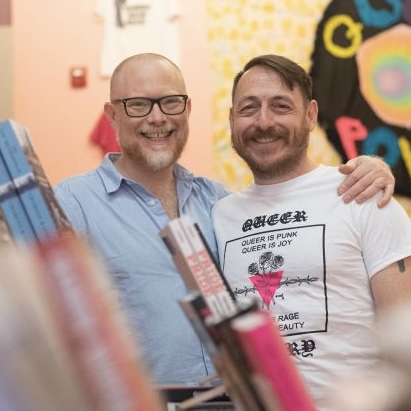
Greg Newton (he/him) moved to New York City in 1991 to escape his evangelical Christian family. He was pursuing a PhD in art history at the City University of New York Graduate Center and teaching art history and writing at Parsons The New School for Design before deciding to leave academia to found the Bureau of General Services—Queer Division with his partner, Donnie Jochum, in 2012.
Donnie Jochum is the co-founder, co-owner of the Bureau of General Services—Queer Division. With his partner Greg Newton, he devotes his energy to creating space for the queer community to discover books and art and experience events that celebrate queer vision. Donnie graduated as a literature major from the University of New Orleans and has a deep retail operations background. He reads at least two books a month, is always searching for interesting new music, and is a deep Star Wars fan.
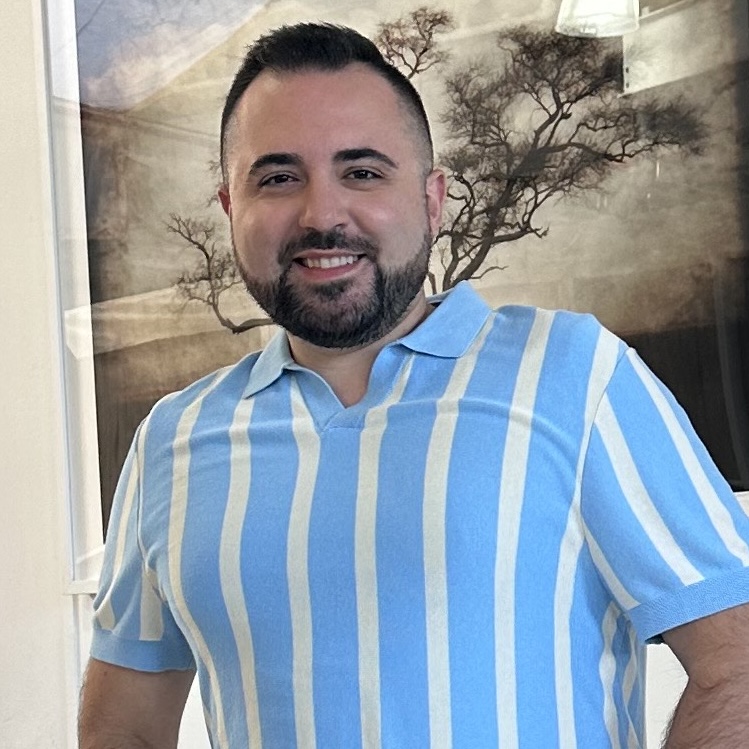
Nick Paul, also known as The Wicked Pumpkin, is a Rhode Island-based content creator who proudly shares his life as a gay man with a passion for travel and connection. From hidden gems in New England to adventures across the globe, Nick brings his audience along as he reviews must-visit spots and experiences. When he’s not creating content, he’s diving into all things horror and Halloween, vibing to pop hits and 80s rock classics, and meeting new people wherever he goes. Follow The Wicked Pumpkin on TikTok and Instagram to see where he goes next!
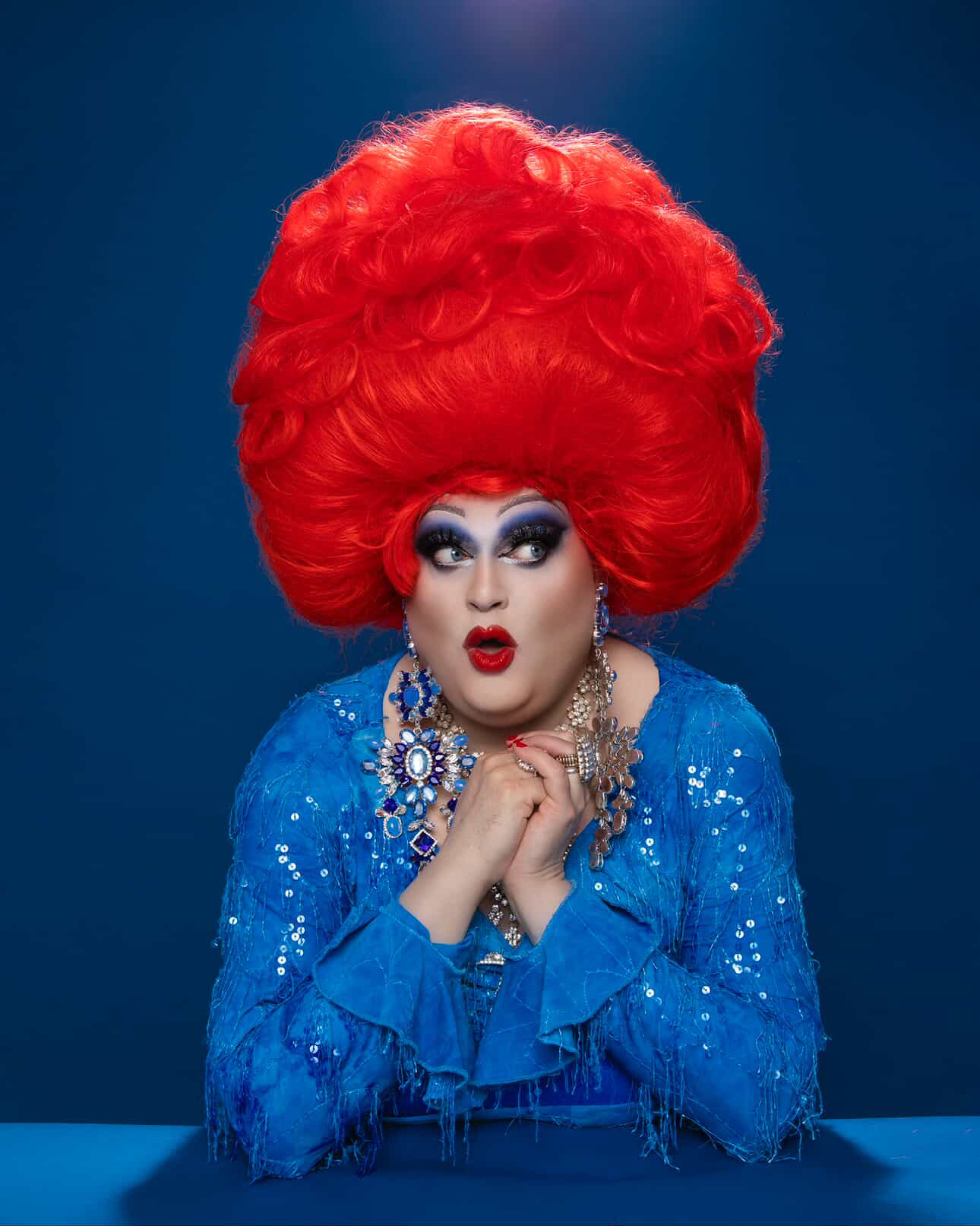
Jeza Belle is a drag queen, comedian, producer, and award-winning author. Jeza's books include the longstanding hit, trashy cookbook, "The Harlot's Guide to Classy Cocktails," and the much-lauded, "Jeza's Jesus Juice: A Drag Queen's Christian Devotional," which broke boundaries—and the internet—as the first Christian book written by a drag queen. In addition, Jeza Belle is the author of "The Presence Collection"—four standalone historical fiction novels that feature LGBTQ+ characters in settings where their existence has been minimized or ignored. Book One, "Blood Rouge," and Book Two, "The Freedom to Love," were released to great reviews and numerous accolades. Book Three, "Abomination - The Story of David and Jonathan," is just out and is already receiving lots of positive responses! Jeza Belle is incredibly proud to have received some of the most prestigious writing awards for her work.
In addition to her books, Jeza has regularly written for numerous publications around the world, from The Huffington Post to The Advocate, and had her own column in both the United States and the United Kingdom.
It is clear from her romping comedic live performances everywhere from Broadway to Barcelona, to her highly charged political opinions, to her edge-of-the-seat writing, that Jeza is a force to be reckoned with across all forms of media.